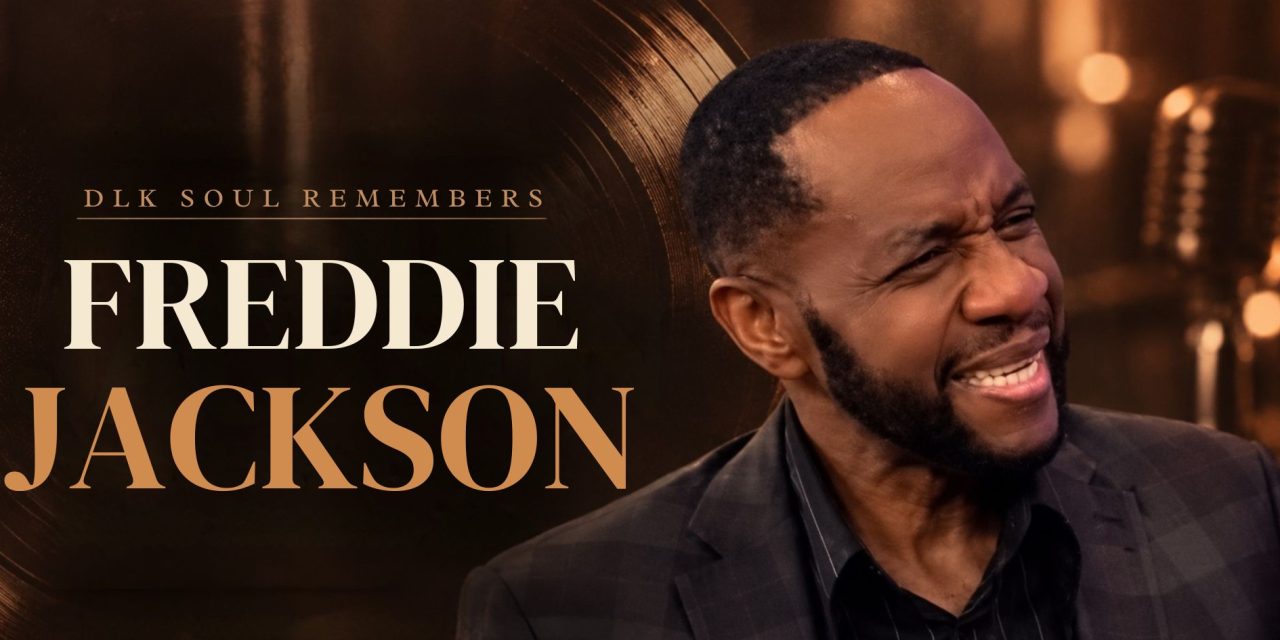
A tribute to the singer’s enduring place in soul music, from his Harlem beginnings to the ballads that made tenderness a defining part of his sound.
Freddie Jackson’s passing leaves R&B with a remarkable voice to remember and a catalog worth revisiting. The singer died on October 5, 2026, according to the Associated Press, which reported that his family announced the news the following day. No cause of death was provided in that announcement. [1]
His legacy reaches beyond a familiar chorus. Jackson made romantic soul feel direct, personal and grown. In a genre that can express love through celebration, uncertainty, longing or heartbreak, his name became closely associated with the intimate conversation: a singer addressing someone, rather than simply performing for everyone.
For DLK Soul, remembering Jackson means revisiting the craft and musical tradition behind that connection. His songs remain part of the story of how classic soul continued to find a home in contemporary R&B.
From Harlem’s Gospel Roots to a Solo Career
Jackson’s official biography traces his musical beginnings to White Rock Baptist Church in Harlem. He sang gospel there and met his future collaborator, Paul Laurence. He later worked in New York’s club scene, sang with Mystic Merlin, and became a backing singer for Melba Moore. [2]
These experiences placed him in several musical settings before his solo breakthrough. Church singing, club performances, and supporting another vocalist each demand attention to the relationship between a voice and its listeners.
Jackson’s journey reminds us that a recognizable vocal identity develops through work as well as talent. His solo career was one chapter in a musical life that had already been taking shape.
The breakthrough that put romantic soul at the center
Jackson released his debut album, Rock Me Tonight, through Capitol Records in 1985. Its title single, “Rock Me Tonight (For Old Times Sake),” spent six weeks at No. 1 on the R&B chart.
“You Are My Lady” followed as another R&B chart-topper. His official biography records platinum success for both the debut and its 1986 follow-up, Just Like the First Time. [2, 3]
The Recording Academy lists two Grammy nominations in 1986: Best New Artist and Best R&B Vocal Performance, Male, for “You Are My Lady.” [4]
These achievements matter because they place Jackson’s romantic approach within the mainstream of his era. The ballad was not a side route in his career. It was central to the identity that brought him recognition.
The follow-up also included “Have You Ever Loved Somebody” and “Jam Tonight,” reminders that his catalog offers more than one kind of entry point. [2] Together, these recordings help place his signature ballads within a broader performing career.
His Contribution to the Quiet-Storm Tradition
Music-industry coverage has placed Jackson’s rise within the quiet-storm radio era and highlighted his sophisticated phrasing. [5] That context helps explain his lasting place in conversations about adult R&B.
Quiet-storm listening allows a voice to hold attention without turning every moment into a climax. Jackson’s connection to that tradition matters because romantic music can carry weight through assurance and vulnerability as well as spectacle.
From DLK Soul’s perspective, his contribution offers a useful way to think about vocal interpretation. A singer’s task is not only to reach the note. It is to make the listener understand why the line matters.
Jackson’s work gives contemporary listeners and music makers a reference point for keeping tenderness at the center of a commercially successful sound. His enduring lesson is one of interpretation: musical control serves the song’s feeling.
A Listening Path Through the Legacy
For listeners returning to Jackson’s music, or discovering it for the first time, three songs offer a focused starting point.
“Rock Me Tonight (For Old Times Sake)” connects this tribute to Jackson’s solo breakthrough. Start with the song that introduced his voice to a much wider audience.
“You Are My Lady” brings the focus to one of his best-known romantic statements. It was also the performance recognized by the Recording Academy. Listen for how a direct declaration of affection becomes a song listeners can make their own.
“Jam Tonight” broadens the picture beyond Jackson’s signature ballads. Include it to remember the performer across different moods, not only his slowest moments.
These are listening invitations, not a ranking of his catalog. Your most meaningful Freddie Jackson song may be an entirely different one.
Remembering The Artist Through The Music
A respectful tribute can acknowledge a loss without allowing the circumstances to overshadow the life and work being remembered. Jackson’s music gives us a substantial place to begin.
His contribution to R&B and soul includes the songs, performances and the space he helped preserve for adult romantic expression. Charts document recognition; they cannot measure every private connection a recording makes.
At DLK Soul, we honor Freddie Jackson by returning to his musical legacy with care. His voice holds a place in R&B history, and his songs remain available for listeners to carry into their own lives.
Which Freddie Jackson song takes you back to a special person, a cherished memory, or a particular season of your life? Share your story and celebrate the music that stays with us through DLK Soul.
References
- Associated Press. “Grammy-nominated R&B singer Freddie Jackson, known for ’80s hits like ‘You Are My Lady,’ dies at 70.” October 6, 2026. Read the article.
- Freddie Jackson Official Website. Official biography. Visit the official website.
- Freddie Jackson. Rock Me Tonight (1985) and Just Like the First Time (1986). Capitol Records.
- Recording Academy. Freddie Jackson artist profile and Grammy nominations. View the Recording Academy profile.