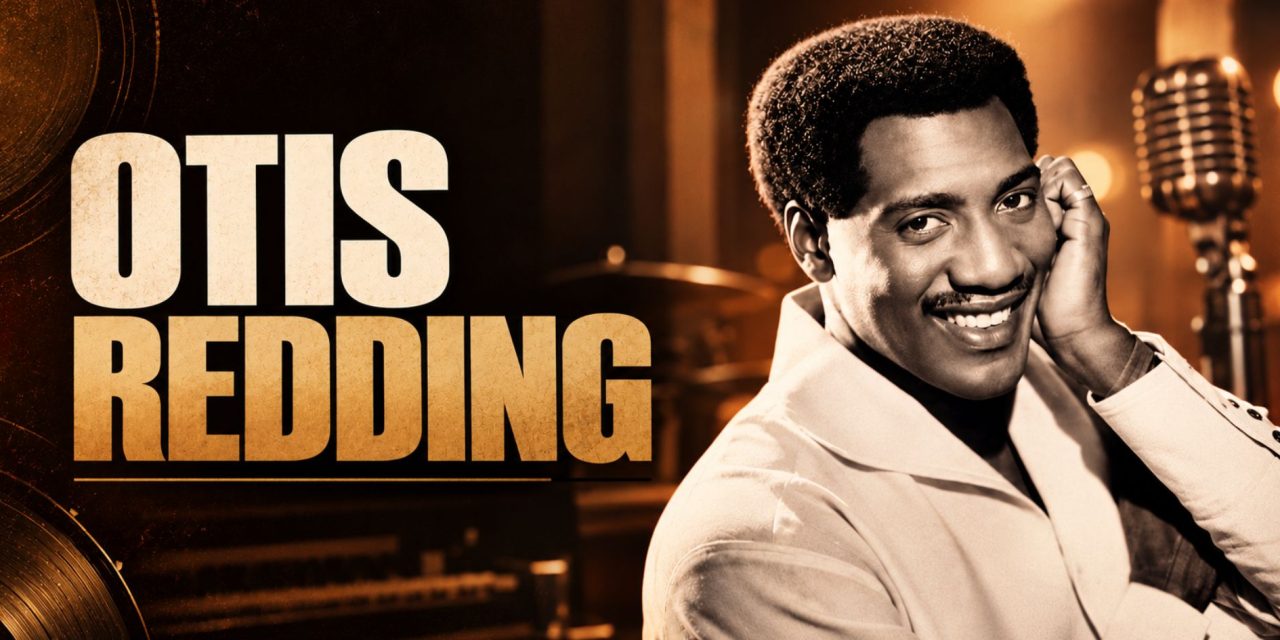
Released on October 15, 1966, Complete & Unbelievable: The Otis Redding Dictionary of Soul turns 60 today. The Otis Redding Dictionary of Soul anniversary offers a chance to revisit an album that captures the connection between a commanding vocalist and the Stax studio musicians around him.
The album’s power goes beyond its songs. Redding shaped phrases for emotional impact, while the ensemble responded with precise timing, restraint, and rhythmic energy. Together, they demonstrate how musicians can transform familiar material through performance.
A Voice That Treats Every Phrase as a Decision
Redding could move from conversational warmth to a full-throated cry without losing a song’s emotional thread. Rather than singing every line with equal intensity, he used dynamics, pacing, and accents to make each phrase count.
That approach matters when interpreting songs written or performed by others. Dictionary of Soul combines original material with reinterpretations, yet Redding’s personality remains unmistakable. His phrasing, rhythmic emphasis, and vocal texture give each performance its own emotional direction.
For singers, the lesson is simple: a powerful performance requires more than range or volume. Knowing when to hold back, build intensity, or reshape a phrase can make the difference between singing a song and truly interpreting it.
The Stax Ensemble as a Second Voice
Redding commands attention, but the musicians around him are equally important to the album’s impact. The Stax ensemble creates momentum without overwhelming the singer.
Listen to how the rhythm guitar, bass, drums, keyboards, and horns interact with the vocal. Horns punctuate phrases, the rhythm section tightens beneath rising intensity, and instrumental responses prepare listeners for what comes next.
These exchanges make the performances feel alive. The band does not simply accompany Redding; it helps tell the story.
Interpretation Without Imitation
One of Dictionary of Soul’s enduring strengths is its demonstration of interpretation as a creative act. Redding’s versions of existing songs show that respecting a composition does not require copying another performer.
Effective reinterpretation begins with understanding a song’s structure and emotional purpose. Artists can then make deliberate choices about tempo, phrasing, instrumentation, and intensity.
For contemporary singers and producers, the principle remains useful: a reinterpretation should reveal a distinct point of view. It should offer listeners a fresh perspective while keeping the original composition recognizable.
A Practical Listening Path
Listeners revisiting Dictionary of Soul for its 60th anniversary can focus on three questions:
- Where does Redding leave space before or after an important phrase?
- How does the band respond when his vocal intensity changes?
- Which arrangement choices make each interpretation feel distinctly his own?
A focused listen can reveal more than treating the album as background music. Choose a few tracks, compare their openings, and notice how each performance establishes its emotional direction.
Why the Album Still Matters
Dictionary of Soul arrived during a defining period for Redding and the Stax sound. Its lasting value lies not only in its historical importance but also in the musical relationships it captures.
At 60, the album demonstrates how soul music can thrive on human interaction. A breath before a phrase, a perfectly timed horn response, or a rhythm section that knows when to push and when to wait can transform a performance.
That is why Dictionary of Soul still rewards close listening. Redding and the Stax musicians built these performances through individual choices and collective understanding.
What can today’s soul artists learn from how Redding and the Stax musicians built a performance together? DLK Soul explores the artists, records, and creative choices connecting soul music’s rich history with its evolving sound today.