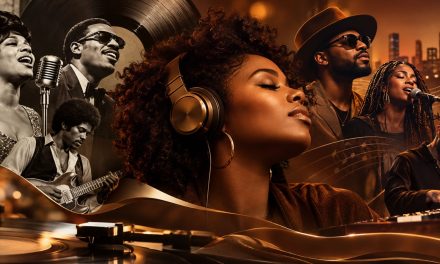
Picture this: Adina Howard setting the mood, D’Angelo deepening the groove, and SZA reshaping it for a new era. Three distinct sounds, one shared DNA—and this series is unpacking exactly what separates them.
We’re starting at the root. Before neo-soul stretched the groove and alt-R&B blurred the edges, classic slow jams defined intimacy in music. This piece zooms in on that foundation—the sound, the feel, and the cultural weight that made slow jams timeless. The next parts will break down neo-soul and modern alt-R&B in the same depth, so stay locked in.
Classic Slow Jams (1970s–1990s)
Late-night radio once had a very specific mood. The kind where everything slowed down, lights dimmed, and the music did most of the talking. That was the era of Quiet Storm—a format pioneered at WHUR-FM in 1976—and it gave rise to some of the most enduring R&B ever recorded.
Artists like Marvin Gaye didn’t just make songs—they built atmospheres. Records like Let’s Get It On felt immersive, almost cinematic in how they layered emotion, arrangement, and space. This wasn’t background music. It was the main event.
By the 1980s and ’90s, slow jams became a staple of R&B culture. Vinyl paused mid-spin, cassette decks rewound obsessively, and entire evenings were soundtracked by these records. The formula worked because it was simple but intentional: live instrumentation, expressive vocals, and tempos that left room to feel.
What Made the Sound So Timeless
Classic slow jams were built on musical choices that prioritized emotion over efficiency.
Falsetto vocals carried a huge part of that weight. Luther Vandross, for example, could glide across notes with precision while still sounding effortless. That balance between control and vulnerability became a defining trait of the genre.
Instrumentation also played a major role. Full bands—often with horn sections, Rhodes piano, and live bass—created a richness that digital production still tries to emulate today. Songs like Sweet Love by Anita Baker show how warmth and clarity can coexist when everything is played, not programmed.
Tempo mattered just as much. Sitting in the 60–80 BPM range, these tracks gave space for storytelling. Lyrics weren’t rushed. They unfolded. You heard every word, every pause, every breath.
Even the production choices leaned into realism. Room reverb, analog warmth, and dynamic range gave songs a sense of presence. Nothing felt over-compressed or overly polished—and that’s exactly why it connected.
Key Artists and Tracks
The era’s impact is best understood through the artists who defined it. Each brought a unique approach while staying rooted in the same emotional core.
| Artist | Signature Hit | Peak Chart | Grammy Wins | Spotify Monthly Listeners |
| Marvin Gaye | Let’s Get It On | #1 R&B | 4 | 20M+ |
| Luther Vandross | Never Too Much | #1 R&B | 8 | 10M+ |
| Anita Baker | Sweet Love | #1 R&B | 5 | 5M+ |
| Freddie Jackson | You Are My Lady | #1 R&B | 0 | 1M+ |
| Keith Sweat | Make It Last Forever | #1 R&B | 0 | 4M+ |
Artists like Freddie Jackson and Keith Sweat added their own textures to the genre, while groups like Boyz II Men helped transition the sound into the next era with layered harmonies and evolving production.
Why Classic Slow Jams Still Matter
These records didn’t just define a genre—they created a blueprint.
Neo-soul would later take that blueprint and loosen it, adding groove and improvisation. Modern alt-R&B would stretch it even further, introducing atmospheric textures and experimental production. But the foundation remains the same.
Classic slow jams taught R&B how to slow down, how to breathe, and how to connect on a deeper level. Strip away the layers, and you’ll still find those principles at work in today’s music.
Wrap Up
Before the genre evolved, before it fragmented into substyles and hybrid sounds, classic slow jams set the tone for everything that followed.
They proved that emotion, space, and musicality could outlast trends. And as we move forward in this series, you’ll start to see exactly how neo-soul and alt-R&B build on this legacy in very different ways.
Which classic slow jam still hits the same every single time you hear it?
Let us know in the comments, and stay locked in as we break down neo-soul and modern alt-R&B next—only on DLK Soul!