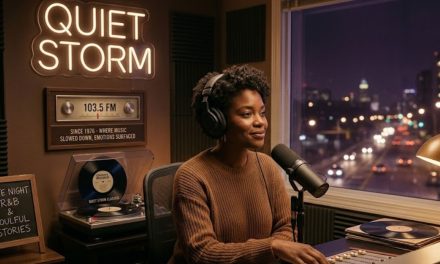
Quiet Storm’s appeal was never just about slow songs. The real magic lay in how the music, the DJ’s delivery, and the late-night atmosphere came together to create a distinctive listening experience. Understanding that combination helps explain why the format became so influential in R&B radio.
The story began at Washington, D.C.’s WHUR-FM in 1976, when Melvin Lindsey’s understated presentation and carefully selected music attracted a loyal audience. But the sound that emerged from that late-night program didn’t stay confined to one station. Its programming approach helped shape how listeners experienced soul and R&B, setting the stage for a broader influence on Black radio and the artists it championed.
From a Signature Sound to a Radio Identity
Quiet Storm’s defining sound blended soulful vocals, romantic ballads, mellow grooves, and selected jazz influences. Yet those ingredients alone don’t explain its appeal. The way they were arranged gave the format its identity.
A familiar classic could sit beside a newer recording, while a tender ballad could lead into a smoother mid-tempo track. The music varied, but the atmosphere remained consistent. That balance allowed Quiet Storm to feel recognizable without becoming predictable.
Melvin Lindsey helped establish this approach at WHUR. His restrained delivery and willingness to let the music speak gave listeners a different kind of radio experience. Rather than relying on constant commentary, the program made musical selection part of its personality.
That distinction would become important as other stations adopted similar programming. Quiet Storm wasn’t simply a collection of slow jams; it was a way of presenting music.
Playlist Curation: Creating a Continuous Mood
The playlist was central to that experience. Slow jams and romantic ballads played an important role, but there was no universal tempo range or fixed sequence that defined every Quiet Storm program.
Instead, DJs considered how songs worked together. Vocal delivery, lyrical themes, instrumentation, and emotional tone all influenced the flow. A mid-tempo groove could provide a welcome change without disrupting the relaxed atmosphere.
This flexibility helped the format accommodate different artists, eras, and musical influences. It also gave DJs room to shape their programs around their audiences rather than follow a rigid formula.
The result was a listening experience that felt connected from one track to the next. That approach helped Quiet Storm develop an identity strong enough to travel beyond its original home.
The DJ’s Role: Less Talk, More Connection
Music selection was only part of the equation. The DJ’s voice and timing helped establish the intimacy associated with Quiet Storm.
Lindsey’s understated delivery complemented the songs instead of competing with them. Brief introductions could set the mood, but the music often needed little explanation. Allowing a performance to unfold uninterrupted made the listening experience feel more personal.
This style demonstrated that radio personalities didn’t always need high-energy delivery to hold an audience’s attention. Musical knowledge, restraint, and consistency could build a strong connection, too.
As other stations developed their own versions of Quiet Storm, that relationship between music and presentation became part of the format’s wider appeal.
How Quiet Storm Influenced Black Radio
Quiet Storm’s popularity at WHUR helped inspire similar programs across the country. Stations adapted the concept to their own markets, giving listeners more opportunities to hear mellow, romantic, and adult-oriented R&B.
The format also showed that radio programming could be built around a particular listening mood. Rather than treating every hour alike, stations could create a distinct experience for audiences settling in at night.
Quiet Storm and Black adult contemporary radio eventually shared some musical territory, including smooth R&B, expressive vocals, and ballads. However, the terms aren’t interchangeable. Quiet Storm is especially associated with intimate late-night programming, while adult contemporary formats can cover a broader range of tempos and styles.
This distinction helps explain Quiet Storm’s place in radio history. Its influence extended beyond individual songs, contributing to a wider tradition of programming that made room for soulful, adult-oriented music.
The Artists Who Fit the Quiet Storm Sound
That programming approach created a natural setting for artists whose music rewarded attentive listening. Anita Baker, Luther Vandross, and Regina Belle illustrate the vocal artistry associated with Quiet Storm’s musical world.
Songs such as Baker’s “You Bring Me Joy,” Vandross’s “Here and Now,” and Belle’s “Baby Come to Me” showcase expressive performances and melodies that suit the format’s intimate atmosphere.
These artists built their careers through their own talent, recordings, and audiences, not through Quiet Storm alone. However, the format offered a setting where this kind of music could sit comfortably alongside established soul classics and newer R&B releases.
That connection between programming and discovery is part of Quiet Storm’s enduring appeal. By bringing different generations of singers into the same listening experience, the format helped keep the softer side of R&B in the conversation.
The Bigger Picture
Quiet Storm began as a late-night radio program, but its influence reached beyond its original broadcast. Melvin Lindsey’s approach at WHUR demonstrated how thoughtful music selection, understated presentation, and a consistent atmosphere could give a radio show a distinctive identity.
That legacy provides a useful starting point for understanding Quiet Storm’s broader place in soul and R&B. The format didn’t simply play romantic songs; it helped shape how listeners encountered them, how stations organized their programming, and how different generations of artists could share the same musical space.
Do you think Quiet Storm would have become the radio phenomenon it is today without artists like Luther Vandross and Anita Baker? Which voices do you believe define the sound? Explore more stories behind soul and R&B with DLK Soul.