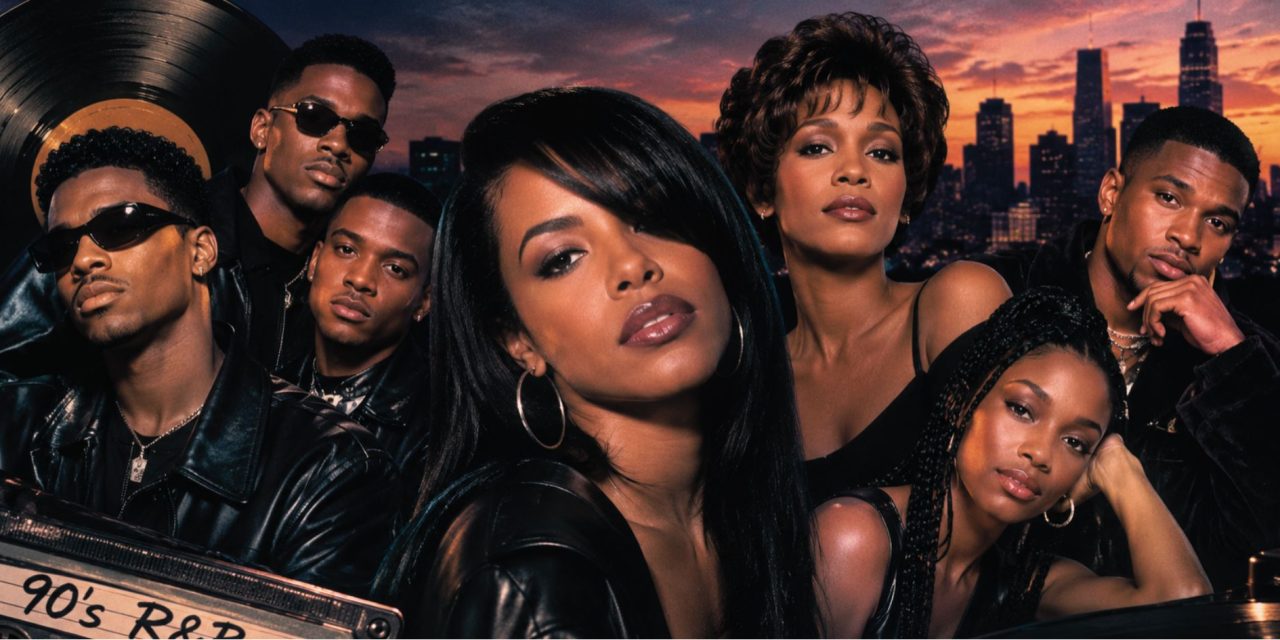
What if your favorite R&B video wasn’t just a performance with good lighting, but a little movie hiding inside a four-minute song? During the 1990s, that idea became increasingly common as directors turned songs into visual stories filled with characters, settings, drama, and cinematic detail.
The change helped redefine what an R&B music video could accomplish. Instead of simply watching an artist sing and dance, audiences could follow relationships, confrontations, memories, and emotional journeys that gave the songs another dimension.
Storytelling and Narrative Techniques
R&B videos increasingly embraced narrative structures that made them feel more like short films. Directors moved beyond performance-focused visuals and began building stories around the emotions already present in the songs.
Cinematic techniques became increasingly important as music-video productions grew more ambitious. Directors used multiple locations, carefully planned sequences, dramatic lighting, and film-inspired editing to give songs a stronger visual identity.
The result was a new kind of music video. The artist could still perform, but the performance existed inside a larger world with its own characters, atmosphere, and emotional progression.
Plot-Driven Concepts
Brandy’s “Have You Ever?“ is a good example. Directed by Kevin Bray, the 1998 video places Brandy inside an empty house belonging to a friend, where she looks through his belongings and watches old footage of their relationship. The story gives the song’s heartbreak a physical setting rather than simply having Brandy perform directly to the camera.
Toni Braxton’s “Un-Break My Heart“ took the approach even further. Directed by Bille Woodruff, the video follows Braxton as she remembers her relationship with a lover who dies after a motorcycle accident. The flashbacks turn the song into a compact romantic tragedy, with the narrative carrying much of the video’s emotional weight.
Monica’s “For You I Will“, directed by Francis Lawrence, used the Orpheum Theatre as its central setting. Monica moves through the empty theater before entering the auditorium, where footage from Space Jam appears on screen. The concept gives the song a theatrical quality while connecting it to the film soundtrack that introduced it.
Even Janet Jackson’s “Again“ leaned heavily into narrative. Directed by René Elizondo Jr., the 1993 video follows Jackson as she remembers a lost love through diary entries and flashbacks featuring actor Gary Dourdan.
Character Development
As storytelling became more sophisticated, characters became just as important as the settings around them. Instead of simply appearing alongside the artist, supporting characters could help reveal the emotional conflict behind a song.
“Again” uses its flashbacks to show a relationship that exists partly through memory. The repeated return to the past gives the video an emotional progression without requiring extensive dialogue.
Aaliyah’s “Are You That Somebody?” took a different approach. The 1998 video, directed by Mark Gerard after Hype Williams withdrew from the project, combines a cave-like setting with choreography and a mysterious visual atmosphere. Rather than depending on a conventional plot, it builds intrigue through movement, setting, and the gradual presentation of its characters.
The important shift was that artists no longer had to choose between performance and storytelling. A video could make the singer the central character while still creating a world around the song.
Directors Who Shaped the Era
The rise of cinematic R&B videos also elevated directors into recognizable creative voices. Hype Williams became particularly influential, developing a visual language built around distorted perspectives, bold colors, unusual sets, and memorable camera work. His credits included TLC’s “No Scrubs,” Missy Elliott’s “The Rain (Supa Dupa Fly),” and D’Angelo’s “Lady.”
Other directors developed their own approaches. Paul Hunter worked with artists including Aaliyah, while Bille Woodruff became associated with R&B videos such as Toni Braxton’s “Un-Break My Heart,” K-Ci & JoJo’s “Life,” and TLC’s “Dear Lie.”
Francis Lawrence also brought a cinematic sensibility to R&B and pop videos, including Monica’s “For You I Will” and Maxwell’s “Fortunate.” Malik Sayeed directed Lauryn Hill’s “Ex-Factor,” bringing a more intimate visual approach to one of the decade’s most emotionally recognizable R&B videos.
| Director | Notable R&B Video Work | Signature Approach |
| Hype Williams | D’Angelo “Lady,” TLC “No Scrubs,” Missy Elliott “The Rain” | Fisheye imagery, bold colors, stylized worlds |
| Paul Hunter | Aaliyah “One in a Million,” Aaliyah “Got to Give It Up” | Atmospheric visuals and distinctive performance imagery |
| Bille Woodruff | Toni Braxton “Un-Break My Heart,” K-Ci & JoJo “Life,” TLC “Dear Lie” | Narrative drama, polished styling, cinematic presentation |
| Francis Lawrence | Monica “For You I Will,” Maxwell “Fortunate” | Cinematic framing and dramatic visual storytelling |
| Malik Sayeed | Lauryn Hill “Ex-Factor” | Intimate imagery, atmospheric lighting, emotional realism |
These directors helped establish the idea that a music video could have its own visual identity rather than simply illustrating the song. Hype Williams, in particular, became so recognizable that his name itself became associated with a distinct visual experience. The Los Angeles Times noted that viewers could often identify his work immediately from its look and feel.
Their influence also extended beyond R&B. The visual language developed during this period helped shape the broader music-video culture of the late 1990s, when MTV and BET could turn an artist’s visual presentation into an important part of their identity.
Conclusion
The 1990s didn’t invent the idea of cinematic music videos, but R&B artists and directors pushed the format into increasingly ambitious territory. Songs could now come with characters, plotlines, emotional arcs, and visual worlds that made viewers want to watch again.
That is part of why so many 90s R&B videos remain memorable today. The songs gave us something to hear, but the videos gave us something to remember.
And honestly, if you can still remember the plot of a music video from 1997 but can’t remember where you left your phone five minutes ago, the mini-movie clearly did its job.
Which 90s R&B video felt like a whole movie to you when you first saw it—and would it still hold up today?
Tell us your pick, then head over to DLK Soul for more stories about the artists, sounds, and visual moments that made soul music unforgettable.