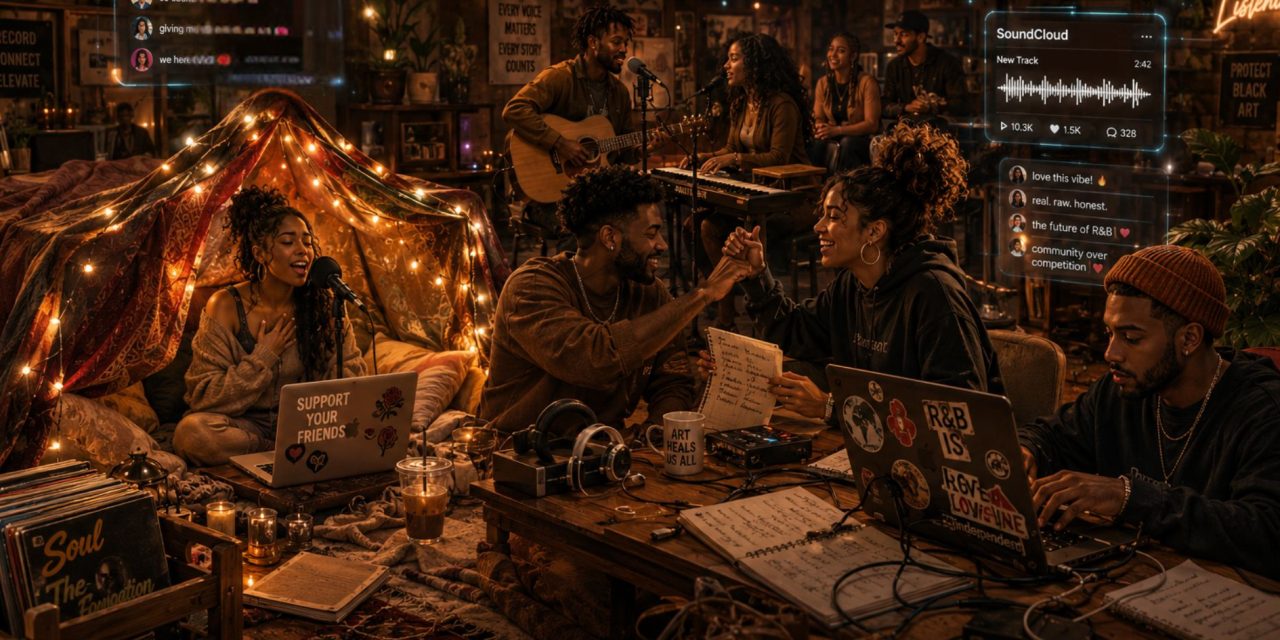
Independent R&B can look glamorous online until you realize half the artists are recording vocals in blanket forts, surviving on iced coffee, and trading studio time like underground currency. Behind the aesthetic Instagram posts, many artists are simply trying to survive creatively and financially at the same time.
That reality is exactly why collaboration and community have become so important in modern R&B. For independent artists, relationships often matter just as much as talent. This piece explores how networking, creative partnerships, and artist support systems are helping independent R&B musicians grow without relying entirely on major industry backing.
Building Networks
For many independent R&B artists, collaboration begins long before success arrives. Artists frequently connect through local music events, online communities, and digital platforms that make sharing music easier than ever before.
Platforms like Bandcamp and SoundCloud have become important spaces for discovering collaborators, sharing unfinished work, and building grassroots audiences independently.
Social media has expanded those opportunities even further. Virtual jam sessions on Instagram Live, collaborative TikTok performances, and producer challenges now allow artists from completely different cities to create music together without ever entering the same studio.
Offline networking still matters too. Open mic nights, small venue performances, and artist collectives continue creating spaces where musicians build genuine relationships that often lead to future collaborations, songwriting partnerships, or production opportunities.
Groups like the Black Artists Coalition also provide support networks that help independent creatives navigate an industry that can otherwise feel isolating and inaccessible.
Support Systems Among Artists
Beyond collaboration itself, many independent R&B artists rely heavily on community support to remain creatively and emotionally sustainable.
Mentorship has become especially valuable for newer artists learning how to balance artistry with the business realities of music. Programs like Sounding Board connect emerging musicians with experienced creatives who can offer guidance on songwriting, branding, production, and industry navigation.
Collaborative projects also strengthen visibility for everyone involved. Initiatives like the R&B Collective allow artists to combine audiences while showcasing different styles and influences within modern R&B.
What makes these communities powerful is that they reduce the pressure of trying to build a music career completely alone. Artists exchange resources, share advice, recommend producers, promote each other’s releases, and create spaces where creative growth feels less competitive and more communal.
In an industry driven heavily by algorithms and visibility battles, genuine artist support systems have quietly become one of independent R&B’s biggest survival tools.
Conclusion
For independent R&B artists, collaboration is no longer just a creative bonus. It has become a necessary part of growth, visibility, and long-term sustainability. Through networking, mentorship, shared resources, and creative partnerships, artists are building communities that help them survive an increasingly demanding industry.
As independent R&B continues evolving, community may ultimately become the genre’s greatest strength.
Do you think independent artists can still succeed alone today, or has collaboration become almost necessary now? Tell us in the comments, and keep exploring the changing world of modern soul music with DLK Soul!