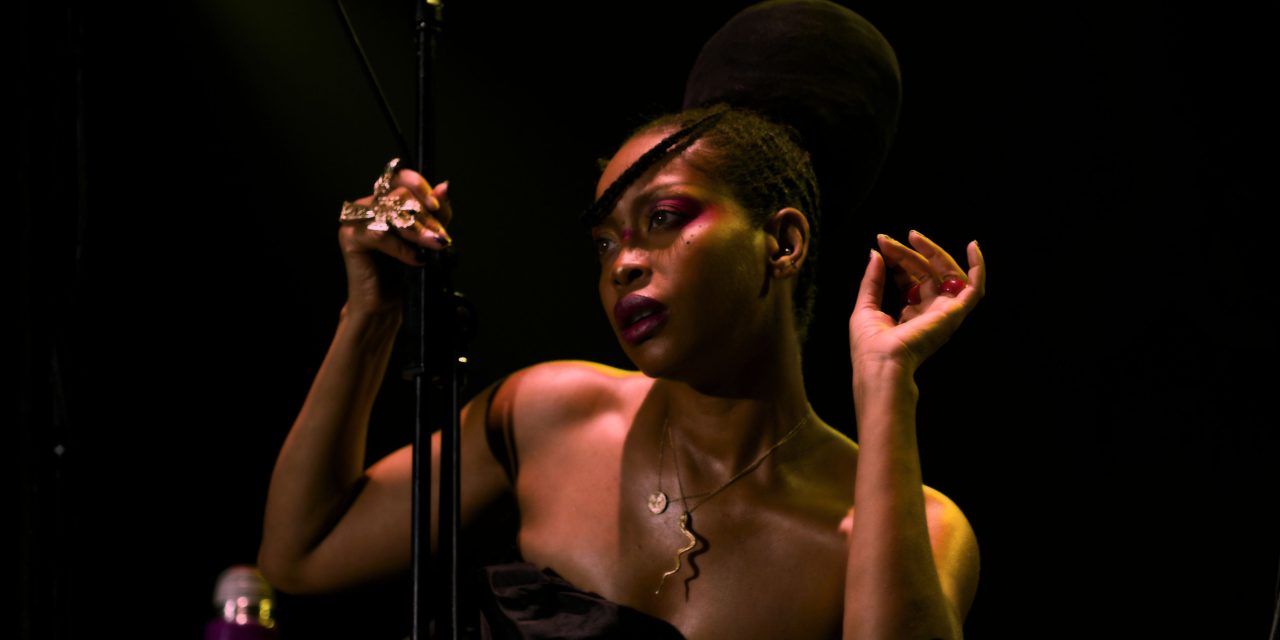
Most artists spend their careers trying to find their sound. Erykah Badu built a career by refusing to stay in one.
That is what makes her so fascinating. She did not simply enter soul music and succeed within its boundaries. She stretched it, reshaped it, and made it more expansive with every era. From the earthy intimacy of Baduizm to bold sonic experimentation and hypnotic live performances, Badu has consistently shown that reinvention is not about abandoning who you are. It is about evolving without losing your center.
Her journey is one of artistic courage, spiritual grounding, and creative freedom—one that continues to influence soul music decades later.
Early Life and Musical Roots
Erykah Badu grew up in South Dallas, where music was less about consumption and more about experience. Family gatherings revolved around live singing, storytelling, and instruments rather than simply playing records in the background. Music felt alive, communal, and deeply personal.
She sharpened her performance skills at The Prophet Bar open mic nights between 1993 and 1996. These sessions gave her room to test original songs, develop stage confidence, and refine her vocal style in front of real audiences.
Radio also shaped her musical instincts. KKDA 104.5’s Sunday soul programming exposed her to classic R&B, jazz, and soul recordings. She paid close attention to phrasing, arrangement, and emotional delivery, studying not just what artists sang, but how they communicated feelings.
Beyond radio, local jazz sessions at Sandaga 813 exposed her to improvisation and spontaneous collaboration. Basement recordings with cousins using cassette four-track setups gave her hands-on experience with production and arrangement.
Just as important was storytelling. Her grandmother’s church circle introduced her to the griot tradition, where stories carried wisdom, memory, and emotional truth. That influence still runs through Badu’s music today. Her songs often feel less like performances and more like conversations, rituals, or stories being passed down.
Breakthrough and Rise to Fame
When Baduizm arrived in 1997, it felt like a reset button for R&B.
At just 26 years old, Erykah Badu emerged with a sound that felt deeply rooted in soul tradition while sounding unlike anything else on radio. She blended jazz textures, live instrumentation, spiritual undertones, and deeply personal lyricism into something fresh and unmistakably her own.
What made her rise remarkable was how different her approach felt. While mainstream R&B leaned heavily into polished production and predictable formulas, Badu leaned into authenticity. Her songs breathed. They felt organic, soulful, and fearless.
Audiences responded immediately—not just to the music, but to the artist herself. Her voice, visual identity, stage presence, and spiritual energy all felt magnetic. She was not chasing trends. She was creating her own lane.
Debut Album Impact
Baduizm sold 610,000 copies in its first month, according to Nielsen SoundScan data from February 1997. Those numbers proved there was major commercial demand for music that prioritized artistry over formula.
Its first week alone moved 108,000 units, outperforming expectations for a debut artist working outside mainstream pop formulas.
The single On & On climbed to number twelve on the Billboard Hot 100 largely through radio momentum and word of mouth. That success showed just how powerful strong songwriting and authentic artistry could be.
The ripple effect was immediate. Within eighteen months, the success of Baduizm helped open doors for a new wave of neo-soul artists, including Jill Scott and Musiq Soulchild. Badu had not just launched her own career—she helped reshape the industry.
Critical Acclaim
Critics recognized the significance of Baduizm right away.
Rolling Stone awarded it four stars, praising its refusal to follow dominant hip-hop production trends. Instead, the album leaned into live arrangements, groove, and atmosphere.
The Source gave it 4.5 mics, while Vibe scored it 8/10 and described it as “ancestral R&B.” That phrase captured the album perfectly—it felt connected to soul’s past while pushing toward its future.
The accolades kept coming. The New York Times selected it as a Critics Choice album. It won the Grammy for Best R&B Album in 1998. The Village Voice Pazz & Jop critics poll ranked it number three for the year.
More importantly, the acclaim validated Badu’s artistic philosophy. She proved that creative independence and commercial success could coexist. That freedom would become central to everything she did afterward.
Conclusion
Erykah Badu did more than launch a successful career—she changed the language of modern soul.
She showed that reinvention does not require losing authenticity. If anything, true reinvention demands deeper honesty, stronger conviction, and the courage to evolve publicly. Across every phase of her career, Badu has remained rooted in truth while refusing to be creatively boxed in.
That balance is rare. It is also exactly why her influence still feels so powerful.
She did not just redefine soul music once. She keeps redefining it.
Which Erykah Badu era feels the most you—the raw soul of Baduizm, the deeper experiments, or the fearless live energy that keeps evolving? Drop your pick in the comments, and stay locked into DLK Soul!