One genre gave us candlelit love songs. Another turned romance into soul-searching. The newest generation? It isn’t afraid to text its therapist before writing the chorus.
Slow jams, neo-soul, and modern alt-R&B all live under the same musical family tree, yet they couldn’t sound—or feel—more different. From recording techniques and vocal styles to lyrical themes and cultural influence, each era reflects the emotions of its time. Understanding those differences reveals how R&B has continuously reinvented intimacy without losing its soulful heart.
Production: From Full Studios to Bedroom Setups
Every era of R&B carries its own production fingerprint, shaped as much by technology as by artistic taste.
Classic slow jams flourished in professional studios, where live bands, analog tape, and large recording consoles created warm, spacious mixes. Artists like Marvin Gaye, Luther Vandross, and Anita Baker relied on full ensembles, rich horn arrangements, lush keyboards, and organic rhythm sections to build timeless romantic records.
Neo-soul retained much of that warmth while embracing digital recording. Artists including D’Angelo, Erykah Badu, Maxwell, and Musiq Soulchild blended live instrumentation with Pro Tools editing and MPC sampling, creating grooves that felt simultaneously vintage and contemporary.
Modern alt-R&B strips things back even further. Artists such as The Weeknd, SZA, Frank Ocean, H.E.R., and Daniel Caesar often build songs around minimal drum programming, atmospheric synths, ambient textures, and intimate vocal production. The focus shifts from filling every frequency to creating emotional space.
| Feature | Classic Slow Jams | Neo-Soul | Modern Alt-R&B |
| Tempo | 60–80 BPM | 70–90 BPM | 70–100 BPM |
| Production | Analog tape & live bands | Hybrid digital/live recording | Laptop production & synth-based |
| Instruments | Horns, strings, keyboards, bass | Rhodes, live drums, sampled grooves | Synths, 808s, ambient textures |
| Vocals | Powerful crooning & falsetto | Soulful storytelling | Whispered, intimate performances |
| Drum Style | Live kits | MPC samples + live drums | 808s & digital percussion |
Waveform comparisons illustrate the evolution beautifully. Classic recordings display dense, saturated analog warmth, neo-soul introduces wider dynamic swings from live performances, while modern alt-R&B favors compressed vocals and spacious arrangements that leave room for atmosphere.
Artists like H.E.R. have become particularly interesting because they blend all three traditions—pairing live guitar with programmed drums and soulful vocals to bridge multiple generations of R&B.
How the Lyrics Changed With Every Generation
Production isn’t the only thing that evolved. The stories themselves changed too.
Classic slow jams celebrated romance through elegant metaphors and timeless expressions of love. Songs often centered on intimacy, devotion, and emotional reassurance, creating the soundtrack for weddings, anniversaries, and quiet evenings.
Neo-soul expanded those conversations. Romance became intertwined with identity, spirituality, personal healing, and self-discovery. Artists like D’Angelo, Maxwell, Jill Scott, and Erykah Badu explored vulnerability without abandoning sensuality, making emotional honesty just as important as romance itself.
Modern alt-R&B often embraces discomfort instead of resolution.
Artists such as The Weeknd, Frank Ocean, and SZA write openly about emotional distance, digital-age relationships, loneliness, anxiety, toxic cycles, and personal contradictions. Love remains the subject—but certainty rarely accompanies it.
| Era | Dominant Themes | Overall Emotional Tone |
| Classic Slow Jams | Romance, desire, commitment | Optimistic |
| Neo-Soul | Spirituality, growth, vulnerability | Reflective |
| Modern Alt-R&B | Isolation, complexity, emotional conflict | Introspective |
Natural language analysis of lyrics reflects this progression. Earlier slow jams tend to carry overwhelmingly positive emotional language, while neo-soul introduces greater emotional complexity. Alt-R&B embraces ambiguity, often allowing conflicting emotions to exist within the same song.
How Each Era Changed R&B Culture
The influence of these genres extends far beyond individual songs.
Classic slow jams established the blueprint for romantic R&B, dominating radio formats such as Quiet Storm and becoming staples of weddings and special occasions. Their influence still shapes countless love songs today.
Neo-soul sparked an artistic movement during the 1990s, encouraging musicians to embrace musicianship, live instrumentation, and creative independence. Publications like Vibe helped define the movement, while communities such as Okayplayer nurtured a new generation of artists.
Modern alt-R&B transformed how audiences discover music. Streaming platforms, playlists, and social media now drive the genre’s success, allowing artists like SZA, Frank Ocean, Daniel Caesar, and The Weeknd to reach global audiences while pushing R&B into entirely new sonic territories.
| Milestone | Year | Genre |
| Quiet Storm launches | 1976 | Classic Slow Jams |
| Vibe defines neo-soul movement | 1995 | Neo-Soul |
| Pitchfork introduces “PBR&B” | 2011 | Modern Alt-R&B |
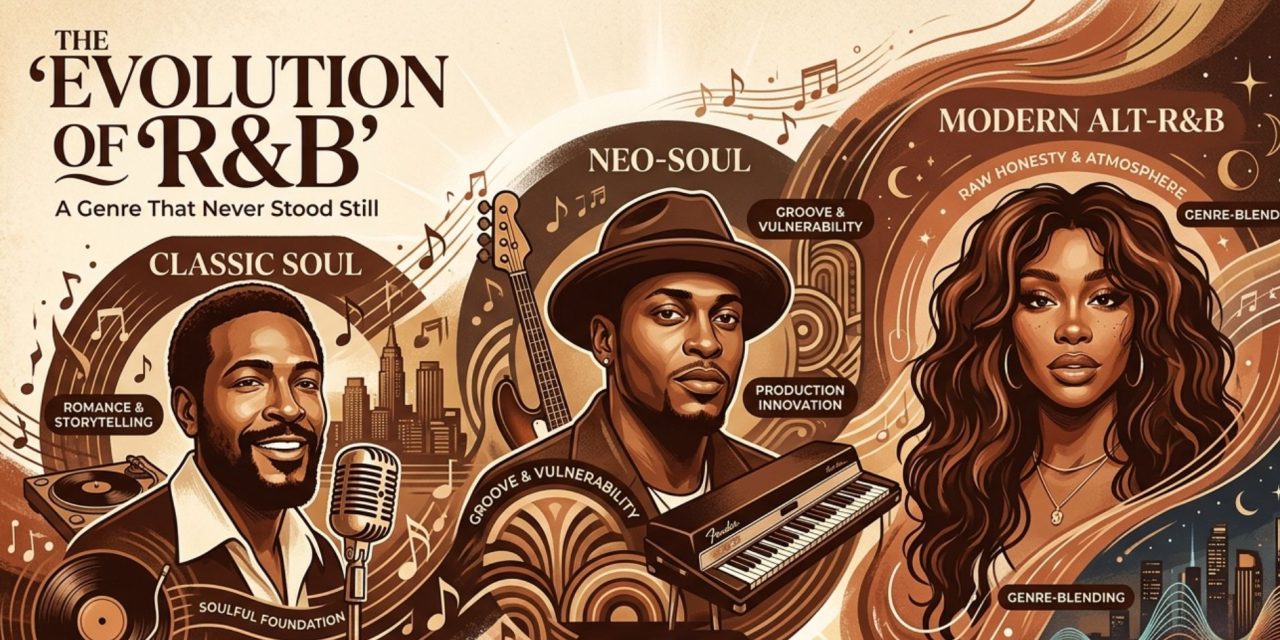
Each era reflects its generation’s priorities. Classic slow jams celebrated romance, neo-soul pursued artistic authenticity, and alt-R&B embraces emotional transparency in an increasingly complicated world.
Conclusion
Comparing these three eras makes one thing clear: R&B has never stood still. Every generation has redefined romance, production, and storytelling to reflect the emotions of its time while preserving the genre’s soulful foundation.
Whether your playlist leans toward Marvin Gaye, D’Angelo, or SZA, each chapter of R&B offers a different perspective on love, vulnerability, and human connection—and together they tell the complete story of the genre’s remarkable evolution.
Which era of R&B speaks to you the most—classic slow jams, neo-soul, or modern alt-R&B? Take a deeper look at the music, artists, and sounds that continue to shape R&B on DLK Soul.