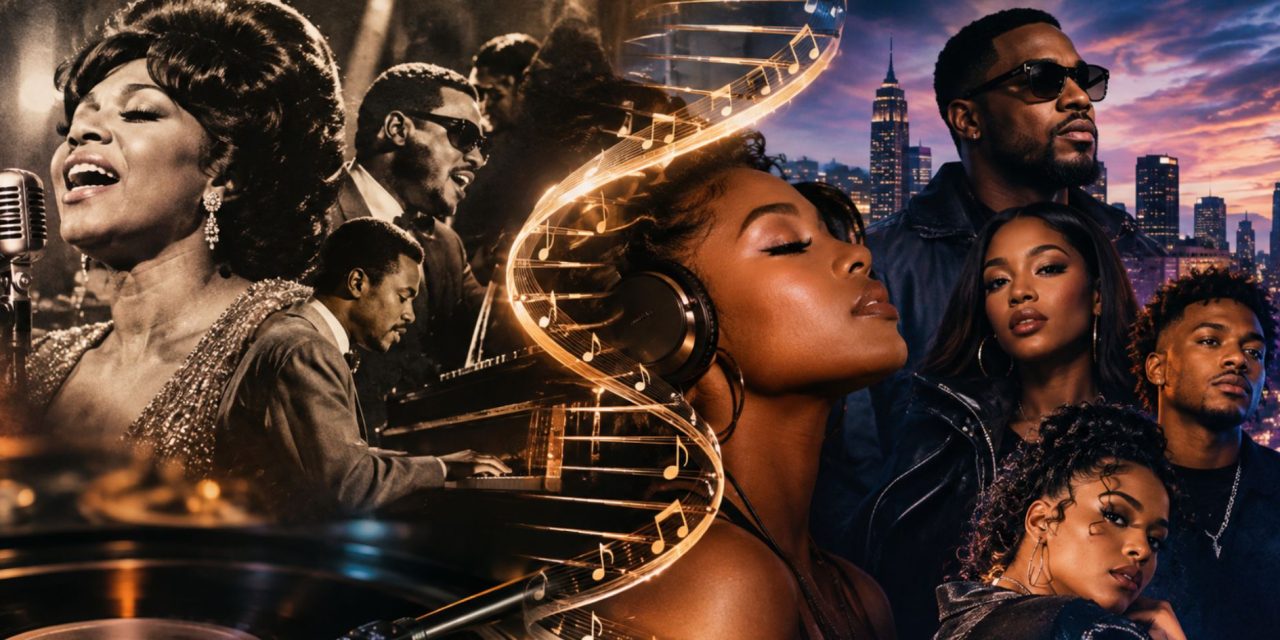
Modern R&B may sound different from the soul records that came before it, but the connection is still easy to hear. Powerful vocals, emotional storytelling, rich harmonies, and expressive instrumentation continue to shape the genre.
Today’s artists take those familiar ingredients and combine them with newer production styles. The result is music that can feel rooted in classic soul while still sounding unmistakably contemporary.
Contemporary Artists Inspired by Soul
Artists such as H.E.R., Daniel Caesar, and Leon Bridges show how modern R&B continues to draw from the emotional character of classic soul. Each artist approaches those influences differently, blending traditional songwriting and vocal expression with contemporary sounds.
H.E.R. is known for combining introspective songwriting with expressive vocals and guitar-driven arrangements. Tracks such as “Focus” demonstrate how relatively restrained instrumentation can leave space for the vocal and emotional message to carry the song.
Daniel Caesar takes a similarly soulful approach while bringing jazz and gospel influences into his music. Albums such as Freudian and Case Study 01 demonstrate how those influences can coexist with modern R&B production and songwriting.
Leon Bridges takes his inspiration even further into classic soul territory. His debut album Coming Home draws strongly from the sounds and aesthetics associated with 1960s soul, creating a deliberate connection with artists such as Otis Redding.
Together, these artists show that looking backward does not necessarily mean sounding outdated. Classic soul provides a foundation, while modern production gives artists room to reinterpret those ideas for today’s listeners.
Musical Techniques and Styles
Modern R&B production often relies on layered harmonies, detailed vocal arrangements, expressive instrumentation, and influences from other genres. Hip-hop, electronic music, jazz, and funk can all find their way into R&B production.
Vocal treatment is particularly important. H.E.R.’s music often combines emotive storytelling with smooth guitar parts, allowing the instrumentation to support the vocal rather than compete with it. That balance can make a production feel intimate while still giving it enough musical detail.
Artists also use vocal processing as a creative choice rather than simply a way to correct pitch. SZA, for example, has used Auto-Tune and other vocal effects as part of her sound. Used thoughtfully, processing can add texture, character, or contrast while allowing the emotion of the performance to be present.
Rhythm provides another way to keep modern R&B engaging. Syncopation, unexpected accents, and subtle rhythmic changes can give a track movement without requiring a complicated arrangement. Studying how artists such as Khalid use rhythmic space and off-beat phrasing can help producers understand how groove shapes the feel of a song.
For producers, the most useful approach is to listen actively rather than simply enjoying the finished track. Pay attention to the vocal layers, instrumentation, rhythm, effects, and moments where the arrangement becomes fuller or more restrained. Those details can reveal how modern R&B borrows from soul while creating a sound that belongs to its own era.
Conclusion
Modern R&B continues to prove that musical influences do not have to stay trapped in their original era. Classic soul provides many of the emotional and musical foundations, while contemporary artists reshape them through new sounds, production techniques, and creative influences.
For producers, that combination offers plenty of room to experiment. The goal is not to recreate an old soul record, but to understand what made those records powerful and find fresh ways to carry those qualities forward.
What if some of the R&B you call “modern” is still borrowing a little magic from decades-old soul?
DLK Soul follows the artists, sounds, and musical stories that make those connections worth hearing.