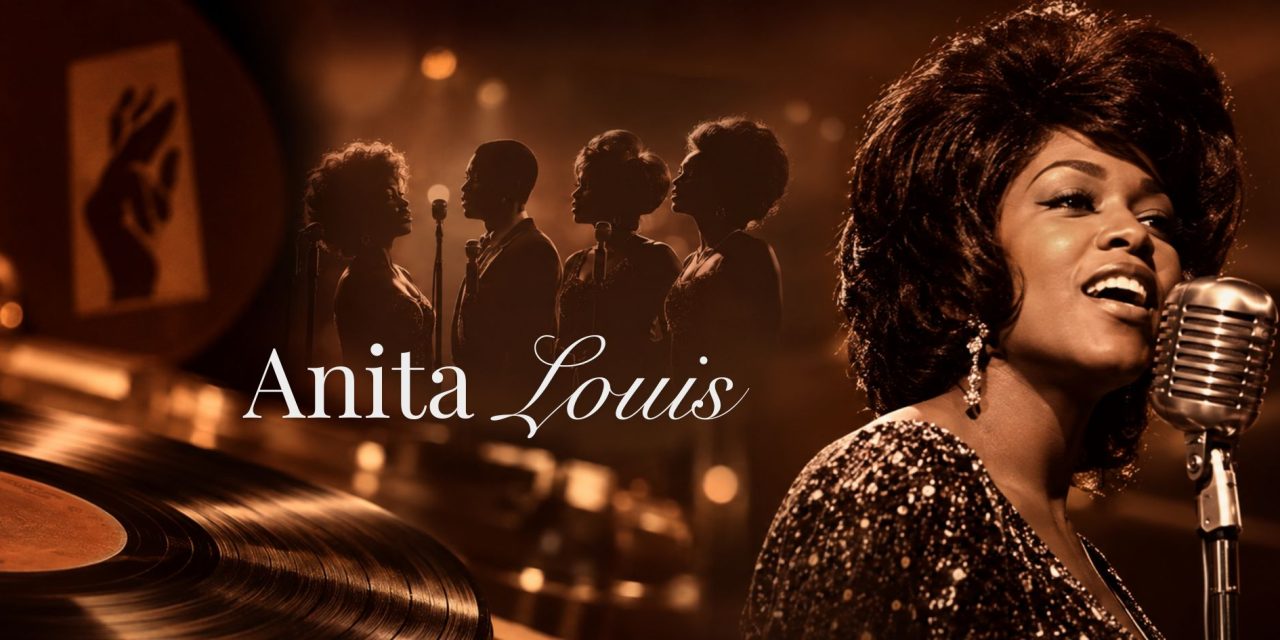
Anita Louis, a founding member of Stax Records vocal group, the Soul Children, died on October 20, 2026, at age 76. The Stax Museum of American Soul Music announced her passing on October 23, remembering her contribution to one of the label’s notable vocal groups. Her death was also reported by SoulTracks. Her cause of death has not been publicly disclosed.
Louis’s story offers a different perspective on Stax’s musical legacy. The label is often remembered through its celebrated solo artists, songwriters, producers, and house musicians. Yet the Soul Children demonstrated another essential part of its sound: the creative possibilities of four distinct voices working together. Their recordings made vocal contrast, shared lead duties, and dramatic exchanges central to the music.
A Group Built Around Vocal Contrast
The Soul Children emerged in 1968, following the breakdown of Stax’s distribution relationship with Atlantic Records. The change meant that Sam & Dave, whose recordings had helped establish the label’s success, were no longer available to Stax. Songwriters and producers Isaac Hayes and David Porter responded by assembling a new vocal group.
The original lineup brought together Anita Louis, John “J. Blackfoot” Colbert, Norman West, and Shelbra Bennett. Hayes and Porter selected singers whose individual voices could contribute to a distinctive group blend. The intention was not simply to find four singers who sounded alike. It was to bring different vocal qualities together and give each performer room within the arrangement.
Louis had already developed connections within Memphis’s music scene. She began singing with the WDIA Teen Town Singers, where radio personality and coordinator A.C. Williams introduced her to Hayes and Porter. She subsequently performed background vocals for Stax artists.
Stax’s artist history also identifies Louis as the original solo singer with the Bar-Kays, a role she held before joining the Soul Children. These early experiences placed her within the label’s musical community before the group began recording.
The group’s blend had a clear center, too. Stax identifies J. Blackfoot as its primary lead vocalist, noting the distinctive roughness and fullness of his voice. The other singers brought their own qualities to the ensemble, giving the group a broader vocal palette.
Louis’s importance therefore extends beyond any attempt to assign her a permanent front-person role. She helped establish the original quartet’s identity, contributing to the collective sound that distinguished the Soul Children.
The Soul Children’s Place in Memphis Soul
The group’s early recordings included “Give ’Em Love,” “I’ll Understand,” and “Tighten Up My Thang.” Their breakthrough came with “The Sweeter He Is,” which reached No. 7 on Billboard’s R&B chart and No. 52 on the Hot 100 in 1969.
The group continued building its catalog through the early 1970s. “Hearsay” reached No. 5 on the R&B chart in 1972, while “I’ll Be the Other Woman” climbed to No. 3 in 1973 and crossed over to No. 36 on the Hot 100.
These records demonstrate the Soul Children’s ability to work within different emotional settings while maintaining a recognizable group identity. Their catalog includes songs built around relationship tensions, romantic uncertainty, and interpersonal drama. The vocal exchanges helped give those subjects a collective dimension.
That approach was part of what made the group distinctive. Rather than relying on one voice to carry every emotional moment, the Soul Children could use changes in vocal presence to shape a song’s perspective. Their recordings made the relationship between individual performers and the larger ensemble an important part of the storytelling.
For Louis, this collective achievement is central to her place in Memphis soul history. Her contribution belonged to a group whose identity depended on the interaction of its members, not simply the prominence of one singer.
What Producers Can Learn From the Soul Children
The Soul Children’s recordings offer useful lessons for contemporary soul and R&B producers. Their approach reminds us that vocal arrangement begins with understanding the people behind the microphones.
A singer’s contribution involves more than pitch or technical range. Tone, texture, phrasing, delivery, and personality all influence how a voice functions within a group. The challenge for an arranger is to recognize those differences and give them a meaningful place in the composition.
Three elements are particularly worth examining when revisiting the group’s catalog:
- Lead handoffs: Follow how changes in lead vocal responsibility affect a song’s perspective. Notice what happens when another singer takes over an emotional moment.
- Vocal contrast: Listen for differences in vocal texture and delivery. Consider how distinct voices can create a sense of dialogue rather than simply blending into one uniform sound.
- Group responses: Pay attention to the relationship between lead lines and supporting vocals. Consider whether the responses reinforce the lead, answer it, or introduce another emotional perspective.
These are not instructions to reproduce a classic Stax formula. They are reminders that effective vocal production depends on understanding what each performer brings to the recording. The Soul Children made that principle an important part of their musical identity.
Beyond the First Stax Era
The Soul Children continued recording through changes at Stax and later signed with Epic Records in 1975. Their Epic releases included Finders Keepers and Where Is Your Woman Tonight? The group subsequently returned to Stax for Open Door Policy, released in 1978.
Shelbra Bennett had departed by the time of the Epic period, leaving Louis as the group’s only female vocalist. The Soul Children disbanded in 1979, bringing their original recording era to a close.
Louis eventually left the music business and pursued a professional career outside performance. She worked for FedEx and Time Warner before becoming a professional business trainer. Her later career adds another dimension to her story, particularly because she had originally intended to attend college before joining the group.
Her departure from the music industry did not erase her contribution to the Soul Children. Nor does her legacy depend on maintaining a constant public presence. Her place in the group’s history was established through the recordings she helped create.
Remembering Anita Louis
Anita Louis helped establish the Soul Children’s original sound during a defining period for Stax Records. Alongside J. Blackfoot, Norman West, and Shelbra Bennett, she contributed to a vocal identity built around contrast, interaction, and shared expression.
Louis was the last surviving member of the original quartet. J. Blackfoot died in 2011, while Shelbra Bennett died in 2013. Norman West remains the surviving original member.
Her passing is a reminder that the history of Memphis soul extends beyond its most frequently celebrated solo performers. The Soul Children deserve attention not only for their chart successes, but also for the vocal craftsmanship that helped distinguish their recordings.
For DLK Soul readers, Louis’s legacy offers a reason to return to the group’s catalog with fresh ears. Listen for the individual personalities within the blend, the exchanges between singers, and the way those voices created a shared musical identity. That is an important part of the Stax story—and a lasting contribution from Anita Louis.
Do you think the vocal interplay of groups like the Soul Children is something modern soul and R&B artists should bring back? Explore more stories about the voices, artists, and recordings that continue to shape the genre on DLK Soul.
Sources
- Stax Museum of American Soul Music – Memorial announcement for Anita Louis
- SoulTracks – Anita Louis obituary
- R.S. Lewis & Sons Funeral Home – Anita Marie Louis obituary
- Stax Records – The Soul Children artist history
- Stax Records – The Soul Children artist spotlight
- Music VF – The Soul Children chart history