Sometimes the instrument that changes a song’s character is not the loudest one in the arrangement. It might sit behind the vocals, above the bass, or alongside the drums, adding just enough movement to make the groove come alive.
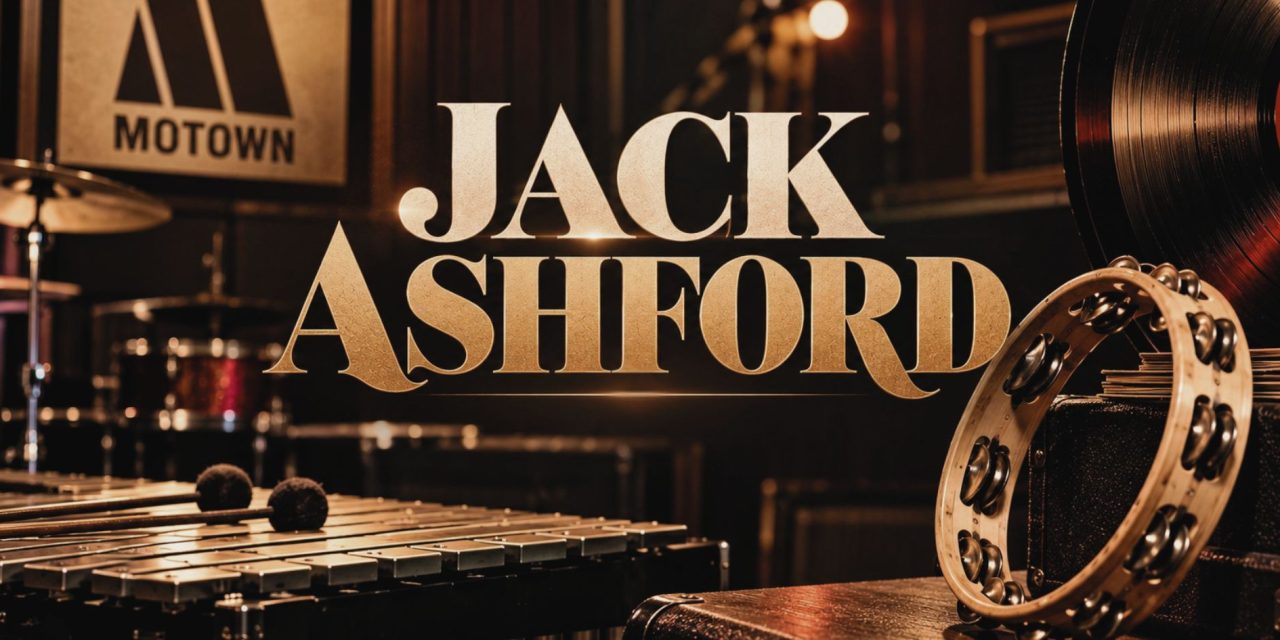
That was part of Jack Ashford’s contribution to Motown. As a member of the Funk Brothers, the Detroit session musicians behind many of the label’s recordings, Ashford became closely associated with the tambourine.
His instrument rarely demanded the spotlight. Yet its bright, metallic sound added another layer to the rhythm section. The way he used accents and dynamics helped give recordings their distinctive movement.
Ashford’s story is therefore worth exploring beyond the familiar description of him as Motown’s tambourine player. His work offers a closer look at how percussion supports a groove, how musicians respond to one another in the studio, and why session credits deserve careful attention.
From Detroit’s Jazz Scene To The Motown Studio
Jack Ashford developed his musical skills through jazz and percussion before joining Motown in the early 1960s. His background gave him experience working within ensembles, where listening and responding were just as important as playing an instrument well.
An encounter during a jazz engagement in Boston helped shape his relationship with the tambourine. Ashford later recalled that bandleader Charles Harris handed him the instrument during a performance of Dave Brubeck’s “Take Five.” That experience became an important part of his development as a percussionist.
Ashford eventually crossed paths with Marvin Gaye, who helped bring him into Motown’s recording environment in 1963. He joined the Funk Brothers, a group of Detroit musicians whose performances helped define the label’s celebrated catalogue.
The collective included instrumentalists such as bassist James Jamerson and drummer Benny Benjamin. Each musician brought a different skill to the studio, creating a rhythm section capable of supporting a wide range of singers and arrangements.
Ashford’s contribution extended beyond the tambourine. He also played vibraphone, demonstrating an interest in different instrumental textures. His work on “There’s a Ghost in My House,” later embraced by Northern soul audiences, is one example of that wider musical range.
Still, it was the tambourine that became his most recognizable contribution.
What Percussion Brought To The Motown Sound
A tambourine might seem like a straightforward instrument. Shake it, strike it, and its metal jingles produce a bright, ringing sound. But its contribution depends on much more than keeping time.
Within a full arrangement, the tambourine can add definition to the rhythm without competing with the bass or overwhelming the drums. Its bright timbre gives it a distinct place in the mix.
This becomes especially useful in recordings with layered vocals, horns, strings, keyboards, and a busy rhythm section. The tambourine adds another audible detail while allowing the lower instruments to retain their weight.
Its placement also matters. A consistent pattern can reinforce the pulse, while selective accents can bring attention to particular moments. A stronger shake may add energy to a chorus. A lighter touch may allow a vocal phrase to remain prominent.
These decisions can make the difference between percussion that simply fills space and percussion that actively shapes a performance.
Ashford understood the importance of responding to the musicians around him. In interviews, he described listening to the rhythm section and adjusting his playing accordingly. He also recalled working with producer Norman Whitfield, who allowed him room to contribute ideas during sessions.
That approach helps explain why his playing deserves more attention than a general reference to tambourine sparkle. He was participating in the arrangement, not merely adding a decorative sound.
How Accents And Timbre Change A Groove
Two elements are particularly useful when examining Ashford’s playing: timbre and accent.
Timbre describes the quality of an instrument’s sound. A tambourine has a bright, metallic character, while a bass guitar produces a fuller, lower sound. A snare drum has a sharper attack. Even when these instruments contribute to the same rhythmic passage, each brings a different character.
Accent refers to the emphasis placed on a particular note or beat. A percussionist can make one movement stand out while keeping the surrounding pattern relatively light.
Together, these elements influence how a groove feels.
Imagine a tambourine playing a repeated pattern. If every movement has the same intensity, it creates a relatively consistent layer of sound. If certain movements receive stronger accents, the pattern develops more shape.
That variation can make a passage feel more energetic or give it a subtle sense of forward movement. It can also help the percussion respond to changes in the arrangement.
There is no universal accent pattern that works for every soul recording. The right approach depends on the tempo, the arrangement, and the relationship between the musicians.
Ashford’s own comments about listening to the rhythm section offer a useful perspective. His playing was informed by the performance around him, rather than by a fixed formula.
For listeners, this provides a practical way to study his work. Instead of concentrating only on how frequently the tambourine sounds, notice where its accents fall and how its presence interacts with the drums, bass, and vocals.
Three Motown Recordings Worth Revisiting
Ashford’s contribution becomes easier to appreciate when listeners approach the recordings with the percussion in mind. The following examples have been identified in historical material about his work.
Edwin Starr – “War”
“War” offers a strong starting point for examining Ashford’s percussion. The recording is among the notable tambourine performances associated with him in the NAMM oral history collection.
Rather than listening only to Edwin Starr’s commanding vocal, follow the relationship between the percussion and the rhythm section.
Notice how the tambourine contributes to the recording’s drive. Its bright sound provides another layer of rhythmic definition without replacing the work of the drums and bass.
Ashford also discussed the recording in an interview, explaining how he responded to the other musicians during the performance. That insight makes the track especially useful when considering percussion as part of an ensemble conversation.
Stevie Wonder – “Signed, Sealed, Delivered I’m Yours”
Stevie Wonder’s “Signed, Sealed, Delivered I’m Yours” is another recording associated with Ashford’s tambourine work.
The track offers an opportunity to consider how percussion supports a lively vocal arrangement. Its contribution is not simply about making the recording busier. It is about adding rhythmic detail while allowing the other instruments and the lead vocal to retain their character.
Listen for the tambourine as one part of the larger arrangement. Pay attention to how its bright timbre sits alongside the drums and other rhythmic elements.
The aim is to understand its role within the recording, rather than assume a particular playing pattern without examining the performance.
Marvin Gaye – “I Heard It Through the Grapevine”
Marvin Gaye’s “I Heard It Through the Grapevine” provides another documented example of Ashford’s work.
The recording has a layered, tense arrangement, making it useful for exploring how percussion contributes to the overall feel. The tambourine adds another point of rhythmic definition within the instrumental backing.
Listen to how the percussion relates to the bass, drums, and vocal. Does it make the rhythm feel more insistent? Does its brightness help distinguish the rhythmic layer from the rest of the arrangement?
These questions encourage a closer listen without attributing specific accents or playing techniques that have not been independently established.
Together, the three recordings show why Ashford’s work deserves attention. They also demonstrate how a musician can make a meaningful contribution without becoming the most prominent voice in a recording.
How To Verify A Motown Session Credit
There is an important distinction between hearing an instrument and identifying the musician who played it.
A tambourine may be clearly audible on a Motown recording. That does not automatically mean Jack Ashford performed it. The Funk Brothers included several musicians, and session personnel could vary from one recording to another.
For music writers and curious listeners, verifying a credit requires more than recognizing a familiar sound.
Start with musician interviews and oral histories. First-person accounts can establish how a musician worked, which instruments they played, and which recordings they remembered. Ashford’s oral history with the NAMM Foundation is a useful resource.
Check album notes and archival documentation. Original liner notes, reissue booklets, session sheets, and label archives can provide track-specific information. These are particularly useful when a general biography does not identify individual recording credits.
Compare reputable historical sources. Interviews with musicians, producers, engineers, and music historians can help confirm details. Where sources disagree, it is better to acknowledge the uncertainty than present one account as settled fact.
Use listening to examine the performance, not prove the identity. Careful listening can help identify a tambourine part and describe its contribution. Establishing who played it requires supporting documentation.
This distinction matters because session musicians often worked across numerous recordings. Their general association with a label or house band does not prove that they participated in every famous release.
It also makes music writing more useful. Readers deserve to know whether a statement comes from an established credit, a musician’s recollection, or an interpretation of what they can hear.
Final Verdict
Jack Ashford’s contribution to Motown demonstrates how a relatively small instrumental part can influence the character of a recording.
The tambourine brought a distinctive timbre to the rhythm section, but its value came from how Ashford used it within the performance. His playing added rhythmic definition and texture while responding to the musicians around him.
That is a more revealing way to understand his legacy than simply describing him as the man behind Motown’s tambourine sound. He was a session musician whose sensitivity to the arrangement helped make the instrument an expressive part of the recording process.
When you revisit a classic Motown recording, which instrument usually catches your attention first? Try following the tambourine instead and discover another layer of the groove. Find more stories behind the musicians who shaped soul music on DLK Soul.