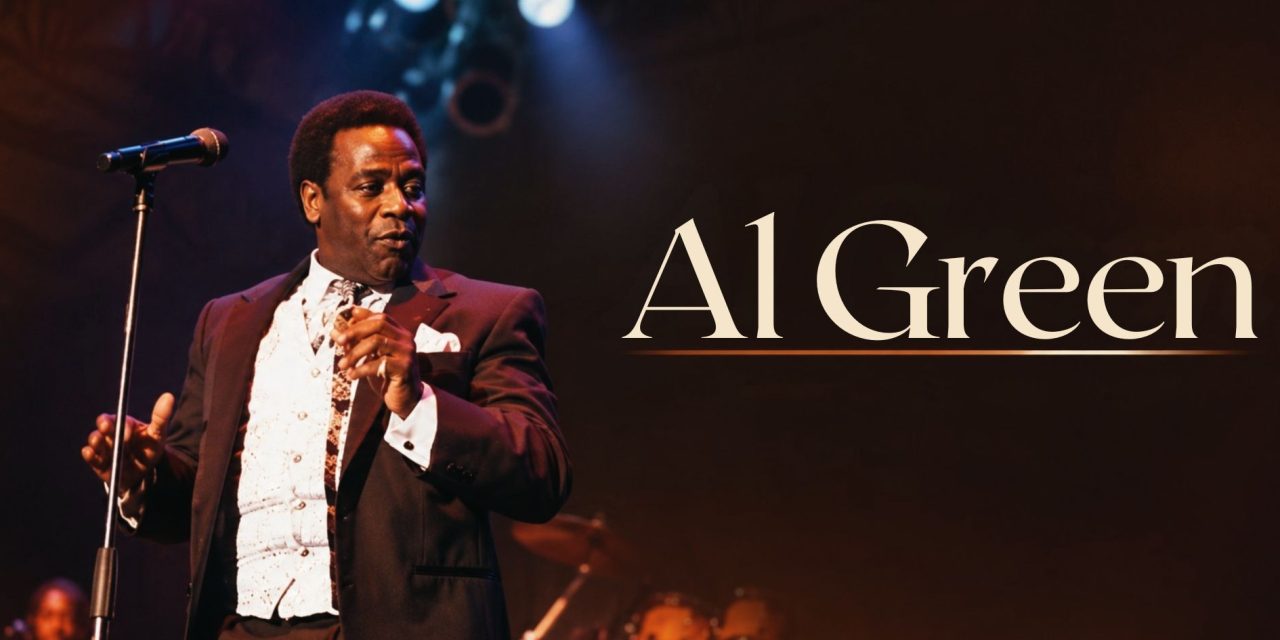
Al Green never needed to overpower a song to make himself heard. With a velvet falsetto, restrained grooves, and lyrics that balanced vulnerability with desire, he helped define a sound that reached far beyond Memphis. His influence offers a compelling example of soft power: the ability of cultural expression to shape tastes, inspire artists, and connect audiences across borders.
From his gospel beginnings to his partnership with producer Willie Mitchell, Green built a distinctive place in soul music. His recordings continue to reach new listeners through covers, samples, and the lasting appeal of his signature sound.
Al Green’s Musical Origins
Al Green was born Albert Greene on April 13, 1946, in Forrest City, Arkansas. His family later moved to Grand Rapids, Michigan, where he grew up singing gospel music with his brothers. At 16, he formed a vocal group called the Creations, developing his sound while navigating the tension between his religious upbringing and his interest in secular music.
Green studied performers such as Sam Cooke, Otis Redding, and Jackie Wilson, absorbing their phrasing and stage presence. His group, later known as Al Green and the Soul Mates, released “Back Up Train” in 1967. The single reached No. 5 on the R&B chart, giving the young singer an early taste of success.
A decisive turning point came in 1969, when Green met Memphis bandleader and Hi Records executive Willie Mitchell while performing in Midland, Texas. Mitchell recognized his potential and brought him to Memphis to record. Their collaboration helped move Green beyond his early group sound toward the spacious, expressive style that would define his best-known work.
At Royal Studios, Mitchell and Green developed a sound built around carefully arranged horns and strings, relaxed rhythms, and room for the lead vocal to breathe. Green’s gospel background remained part of his musical identity, even as he explored romantic themes. That combination of spiritual roots and secular soul became one of his defining characteristics.
Rise to Soul Stardom
Green’s breakthrough gathered momentum in the early 1970s. “Tired of Being Alone” became a major hit in 1971, reaching No. 11 on the Billboard Hot 100. Later that year, “Let’s Stay Together” topped both the pop and R&B charts, establishing him as a leading voice in American soul.
His success continued with “I’m Still in Love with You,” “You Ought to Be with Me,” and “Call Me (Come Back Home).” Across the early 1970s, Green combined commercial appeal with an intimate vocal style that felt personal rather than theatrical. His records reached millions of listeners without sacrificing the subtleties that made his performances distinctive.
Green’s partnership with Mitchell was central to that achievement. Their work at Hi Records helped establish a recognizable Memphis sound, and Green’s recordings became some of its most enduring examples. By the mid-1970s, his influence extended well beyond the American R&B audience.
Signature Sound and Style
Green’s signature sound rests on contrasts. His airy falsetto can feel fragile and intimate, while his lower register adds warmth and weight. He moves between them with remarkable ease, allowing a small vocal shift to communicate longing, tenderness, or urgency.
Listen to “Love and Happiness” or “Tired of Being Alone” and notice how much the arrangements leave unsaid. The rhythm section stays relaxed, the instruments answer rather than overwhelm the vocal, and the groove develops without demanding constant attention.
Mitchell’s production played a crucial role. The Hi Rhythm Section supplied the rhythmic foundation, with musicians including guitarist Mabon “Teenie” Hodges, bassist Leroy Hodges, and organist Charles Hodges. The Memphis Horns added distinctive brass arrangements to recordings including “Let’s Stay Together.”
Rather than relying on sheer volume or elaborate arrangements, these musicians created movement through timing, tone, and restraint. Green could stretch a phrase, soften a word, or rise into falsetto while the band held the groove steady.
That balance became part of his wider appeal. His recordings were polished without feeling distant, sensual without losing their emotional depth, and rhythmically engaging without overwhelming the voice. The result was a sound that could feel both deeply personal and broadly accessible.
Legacy in Popular Culture
Al Green’s influence did not end with the success of his original recordings. His music has continued to circulate through cover versions, samples, and reinterpretations, allowing later generations to encounter his work in different musical contexts.
Hip-hop producers, in particular, have drawn on the rhythms and instrumental textures of his catalog. For example, The Notorious B.I.G.’s “Dead Wrong” samples drums from Green’s “I’m Glad You’re Mine.” The Game’s “Never Be Friends” also samples the track, while Todd Edwards’s “So Real” draws on Green’s “I Can’t Get Next to You.”
These connections show how a recording can acquire new life outside its original setting. A drum break may become the foundation of a rap track, while a vocal phrase or instrumental groove can inspire a different interpretation. The original music remains recognizable, but its role changes with each new context.
Green’s career also reflects the meeting point between secular and sacred music. His gospel upbringing shaped his vocal expression, and his later commitment to ministry became a major part of his life. In the 1970s, he increasingly pursued gospel music while continuing to record secular material. That journey adds another layer to a catalog already rich with emotional and spiritual contrasts.
His broader cultural influence is a form of soft power because it travels through attraction rather than force. People encounter his voice through a family record collection, a film, a sampled beat, a cover, or a streaming playlist. They may not know the history of Hi Records, yet they can still respond to the feeling and musical choices embedded in the recordings.
| Later recording | Al Green source | Year of later recording |
| “Dead Wrong” — The Notorious B.I.G. feat. Eminem | “I’m Glad You’re Mine” | 1999 |
| “Never Be Friends” — The Game | “I’m Glad You’re Mine” | 2005 |
| “So Real” — Todd Edwards | “I Can’t Get Next to You” | 1993 |
These examples illustrate only part of Green’s musical afterlife. They also demonstrate why his legacy cannot be measured by original chart positions alone. His work remains useful to artists who want expressive vocals, memorable grooves, and musical textures that reward repeated listening.
The Bottom Line
Al Green’s legacy rests on more than a remarkable voice or a run of hit records. His collaboration with Willie Mitchell helped define a lasting Memphis soul sound, while his gospel roots and emotionally direct performances gave that music a distinctive character.
That is the quiet strength of his soft power. Green’s recordings continue to cross musical and cultural boundaries because their feeling remains accessible, even when the listener encounters them through an entirely different genre.
Which Al Green recording stays with you longest: “Let’s Stay Together,” “Love and Happiness,” or another favorite? Share the song that means the most to you and explore more stories about the artists shaping soul music with DLK Soul.