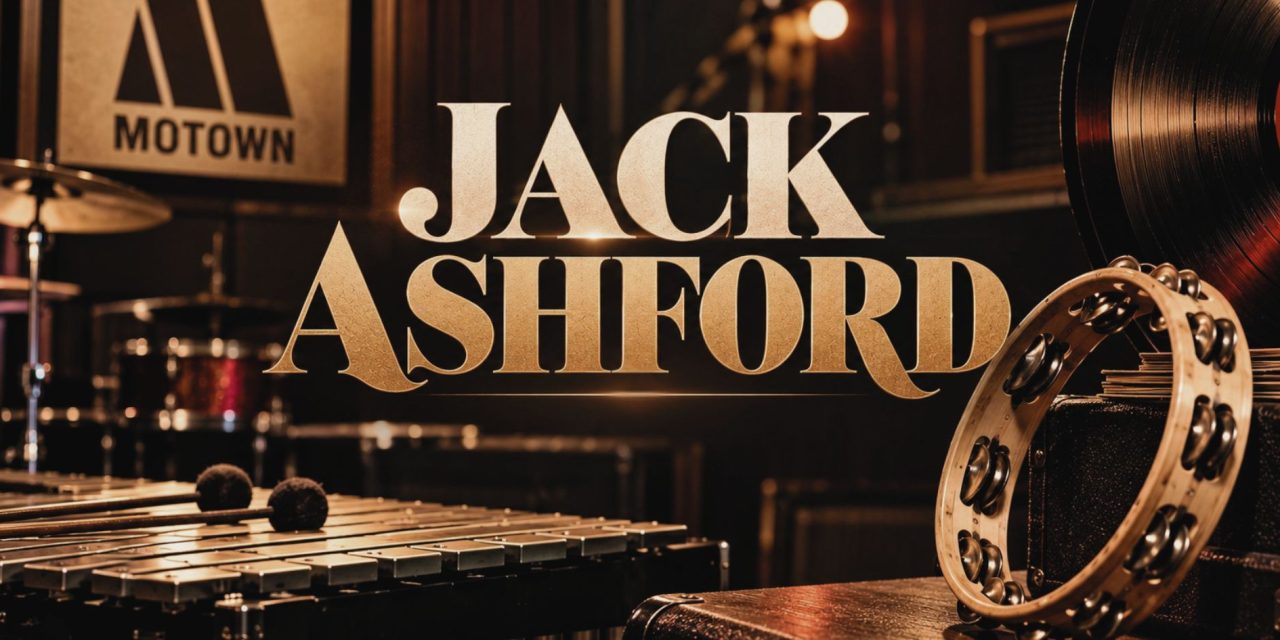
Motown’s biggest hits had a distinctive groove, but not every musician who helped create it became a household name. Jack Ashford was one of those musicians, using his tambourine to add rhythmic sparkle to hundreds of recordings and helping shape the Motown Sound.
Ashford was a session musician in the Funk Brothers, the collective of Detroit players who backed countless Motown Records releases during the label’s golden era. Berry Gordy’s operation at Hitsville U.S.A. relied on these musicians, and Ashford helped shape its rhythm section one shake at a time.
His instrument of choice was humble. A tambourine is not a guitar, a drum kit, or a voice. Yet in Ashford’s hands, it became a signature texture of pop soul, giving some of the era’s most danceable records a small sound with an outsized role. His story reveals how a seemingly simple instrument can help define an entire musical identity.
From Local Detroit Player to Funk Brothers Core Member
Before joining the Funk Brothers, Jack Ashford honed his skills in Detroit’s vibrant jazz and R&B clubs, playing vibraphone and percussion. In the late 1950s and early 1960s, the city offered a proving ground where musicians learned through jam sessions and developed the ability to play together without competing for attention.
Ashford brought that experience to Motown in the early 1960s. He understood something crucial about studio recording: the job was not to show off, but to serve the song. That mindset made him a natural fit for the Funk Brothers, whose members valued feel over flash.
His contributions extended well beyond the tambourine. He played vibraphone on tracks such as “There’s a Ghost in My House,” a recording that later became a beloved anthem in Northern soul circles. The vibes gave the song its eerie, glowing atmosphere, demonstrating that Ashford’s ear for texture extended across instruments.
Over the years, he became one of popular music’s most recorded percussionists. He appeared on countless sessions alongside bassist James Jamerson, drummer Benny Benjamin, and other core players. He was not simply a sideman in the background, but a core member of the musical team that made Motown move.
Why the Tambourine Became His Signature Instrument
The tambourine’s crisp, jingling timbre cut through Motown’s dense arrangements, making it an ideal instrument for driving the backbeat. While a drum kit occupied much of the low and mid ranges, the tambourine added brightness in a higher frequency range where fewer instruments competed.
That separation mattered. Motown records often featured strings, horns, multiple voices, and a busy rhythm section, all competing for space on analog tape. Ashford’s playing sliced through the mix like a splash of light, marking the backbeat without muddying the low end.
His technique was deceptively simple. He held the instrument with a loose but controlled grip, using wrist motion rather than arm force to produce a clean, even jingle. That economy of movement helped him maintain steady eighth notes and sixteenth notes throughout a session without tiring or losing the pocket.
Crucially, he treated the tambourine as more than a timekeeper. He used dynamics, accent, and light syncopation to add shape, pushing a chorus forward or easing back during a verse. In doing so, he turned a simple percussion instrument into a textural voice. This voice helped define the Motown Sound and continues to make bodies move on dance floors today.
The Lasting Impact of Jack Ashford’s Sound
Jack Ashford’s contribution to Motown shows how musical identity is often built through details that might otherwise go unnoticed. His tambourine playing added clarity, energy, and movement to arrangements already rich with sound. Furthermore, his work on vibraphone demonstrated a musical versatility that extended beyond his signature instrument.
His legacy offers a valuable lesson in soul music history: defining a sound is not always about taking center stage, but understanding exactly what a song needs. To explore more stories behind the artists, recordings, and influences that shaped soul music, visit DLK Soul.
