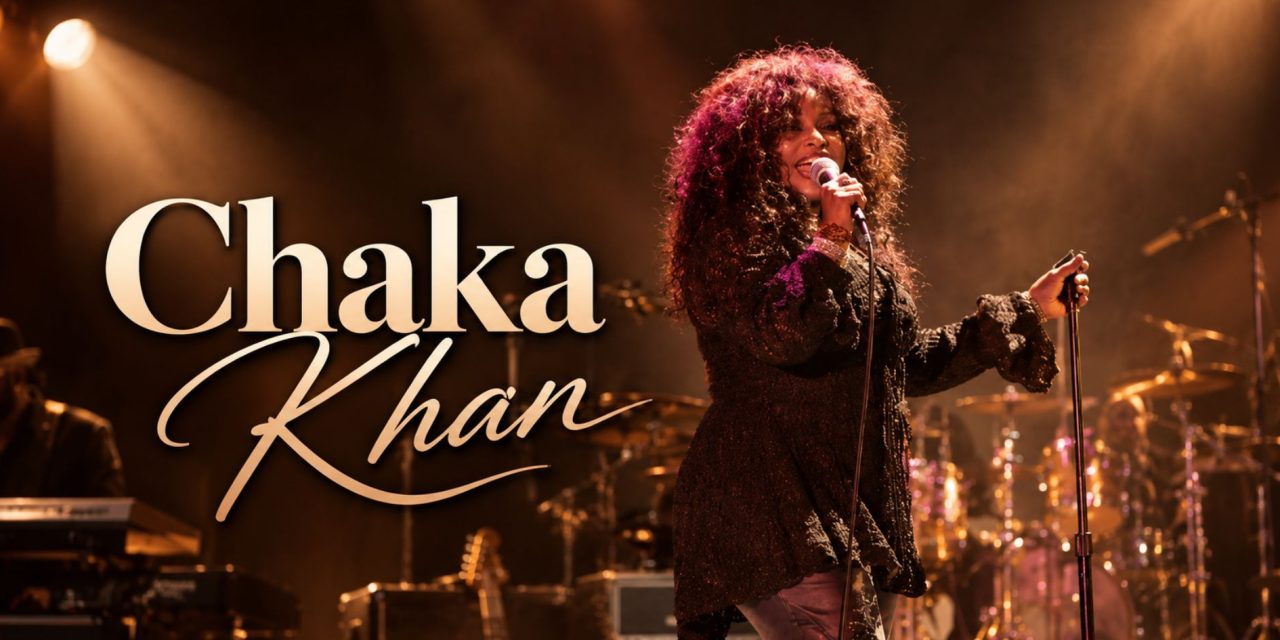
BET announced on October 22, 2026, that Chaka Khan will receive the Classic Soul Honor at the 2026 Soul Train Awards. The ceremony will be taped at Chicago’s Harris Theater on November 5 and broadcast Friday, November 27, at 8 p.m. ET/PT on BET and CBS.
The recognition celebrates Khan’s contribution to soul and R&B, but its significance extends beyond another career honor. It connects a Chicago-born vocalist whose work crosses musical genres with a cultural institution that helped bring Black music, dance, and style to national television.
The location makes the announcement particularly meaningful. Chicago is where Don Cornelius launched Soul Train in 1971, long before the television show became a defining platform for Black popular culture. Khan also began her musical journey in the city before rising to prominence with Rufus.
Her recognition therefore brings together two important parts of soul history: an artist whose voice helped expand the genre and a television institution that helped give its music and culture a wider stage.
What BET’s Classic Soul Honor Recognizes
BET describes the Classic Soul Honor as recognition of an artist whose influence and decades of excellence have shaped soul and R&B. In Khan’s case, that influence spans her groundbreaking work with Rufus and a solo career featuring some of the most recognizable recordings in both genres.
BET President Louis Carr described Khan as the embodiment of soul music. He also credited her with expanding the possibilities of soul and R&B while inspiring generations of performers to find and own their voices.
The award recognizes more than the popularity of individual songs. Khan’s career demonstrates how a vocalist can move between funk, soul, R&B, pop, and jazz without losing a distinctive musical identity. Her recordings have reached different audiences and production eras, but her approach to singing remains a recognizable thread.
The announcement also comes during an active period. Khan’s latest album, CHAKZILLA, features collaborations with Sia, Snoop Dogg, Lenny Kravitz, and songwriter and producer Greg Kurstin. The project adds another chapter to a career that has never been confined to one musical setting.
Why Chicago Makes This a Full-Circle Soul Train Moment
The Soul Train connection begins in Chicago. Don Cornelius created the original television program in 1971, giving Black artists, dancers, and audiences a national platform for music and cultural expression.
The show became known for its performances, dance line, fashion, and presentation of Black popular culture. It did more than introduce audiences to new records. It gave music and the communities surrounding it a visible cultural space.
The 2026 Soul Train Awards bring the ceremony itself to Chicago for the first time. BET and the City of Chicago announced their partnership on October 26, confirming the Harris Theater as the venue. The ceremony’s return connects the awards to the city where the original television program began.
For Khan, the setting carries an additional personal connection. She was born in Chicago and developed her musical identity there before becoming the lead singer of Rufus. Her rise from the city’s music scene to international recognition makes the location more than a convenient backdrop.
There is also a previous connection between Khan and the awards. She received the Soul Train Legend Award in 2009. The 2026 Classic Soul Honor recognizes her at another stage of her career, placing her influence within a continuing conversation about soul music’s history and development.
The full-circle significance is therefore not simply that the awards are returning to Chicago. It is that a Chicago-born artist whose work helped shape soul and funk is being recognized by a franchise that began in the same city.
Chaka Khan’s Voice: Influence Beyond Vocal Power
Chaka Khan is frequently celebrated for her powerful voice. While that description captures one aspect of her singing, it does not fully explain her influence. Her musical authority also comes from how she uses rhythm, phrasing, tone, and expressive control across different styles.
Her work with Rufus provides one important example. Recordings such as “Tell Me Something Good” and “Sweet Thing” place her voice within funk and soul arrangements. Her delivery works alongside the band’s rhythmic foundation rather than simply sitting above it. The relationship between vocalist and ensemble is central to the character of those recordings.
Her solo work reveals another dimension. “I’m Every Woman” carries an assertive, celebratory quality, while “I Feel for You” brings her into a different musical environment shaped by contemporary R&B and hip-hop influences. These songs do not rely on the same arrangement or stylistic approach, yet both remain unmistakably Chaka Khan performances.
Her jazz work also deserves attention. Khan’s phrasing shows an understanding of how a vocalist can shape a musical line through timing and expression. A phrase does not always need to follow the most predictable rhythmic placement to communicate its feeling. Small variations in timing, emphasis, and delivery can change how a lyric sits within an arrangement.
That flexibility helps explain why her influence extends beyond vocal range or volume. She understands how to inhabit different musical settings while retaining a strong sense of identity. For singers, that is an important distinction: versatility is not simply the ability to imitate different genres, but the ability to bring a recognizable artistic perspective into each one.
Her career also demonstrates why soul cannot be treated as a closed musical category. The genre has continually absorbed ideas from gospel, blues, jazz, funk, pop, and other traditions. Khan’s catalog reflects that exchange, making her a useful reference point for contemporary performers navigating similarly broad influences.
Soul Train’s Cultural Role Goes Beyond the Music
The significance of the Soul Train Awards also deserves attention beyond the ceremony itself. The original Soul Train helped establish a national television space where Black music and cultural expression could be presented on their own terms.
Its influence reached beyond the artists performing on the program. The dancers, fashion, choreography, and dance line became part of its identity. Viewers could encounter new music alongside the styles and movements developing around it.
That combination helped make Soul Train an important cultural platform. It reflected how Black music circulated through communities, influenced popular culture, and connected generations of performers and audiences.
The 2026 awards return to that history at a time when soul and R&B continue to evolve through new artists, collaborations, and production approaches. Honoring Khan places a foundational voice within that ongoing conversation. It also recognizes the importance of preserving the cultural institutions that helped make the music visible.
For DLK Soul readers, this is an important part of the announcement. Khan’s honor is about her individual achievements, but it also points toward the larger cultural history that made those achievements part of a shared musical legacy.
What BET Has Confirmed—and What Remains Unannounced
BET has confirmed Khan as the recipient of the Classic Soul Honor, the Chicago venue, the November 5 taping date, and the November 27 broadcast on BET and CBS. The network has also confirmed that Anthony Anderson will host the ceremony.
However, the specific details of Khan’s honor presentation remain unannounced. BET’s October 26 announcement stated that additional performers and honorees would be announced in the coming weeks. It did not identify a tribute lineup, a presenter for Khan’s award, or the songs that might feature in a performance celebrating her catalog.
Those details should not be treated as confirmed until the network releases further information. The distinction is important because the award itself already carries a clear significance without requiring assumptions about how the ceremony will present it.
A Recognition That Connects Generations of Soul
Chaka Khan’s Classic Soul Honor brings together an influential vocalist, a Chicago musical heritage, and a television franchise that helped shape how Black music was experienced nationally.
Her voice has endured not simply because of its power, but because of the musical intelligence behind it. Across Rufus, her solo recordings, and her work in other genres, Khan has demonstrated how a singer can adapt to different musical languages without losing a recognizable identity.
The Chicago setting gives the recognition its full-circle quality. It connects the city where Khan’s story began with the place where Soul Train first gave Black music and culture a national platform.
As the 2026 awards approach, the announcement offers a timely reminder that soul’s history is not just a collection of celebrated songs. It is also the story of the artists and cultural spaces that allowed the music to grow, travel, and influence generations.
What makes Chaka Khan’s voice so enduring for you: its power, its versatility, or the way she moves between musical styles? Explore more stories about the artists and cultural influences shaping soul music on DLK Soul.