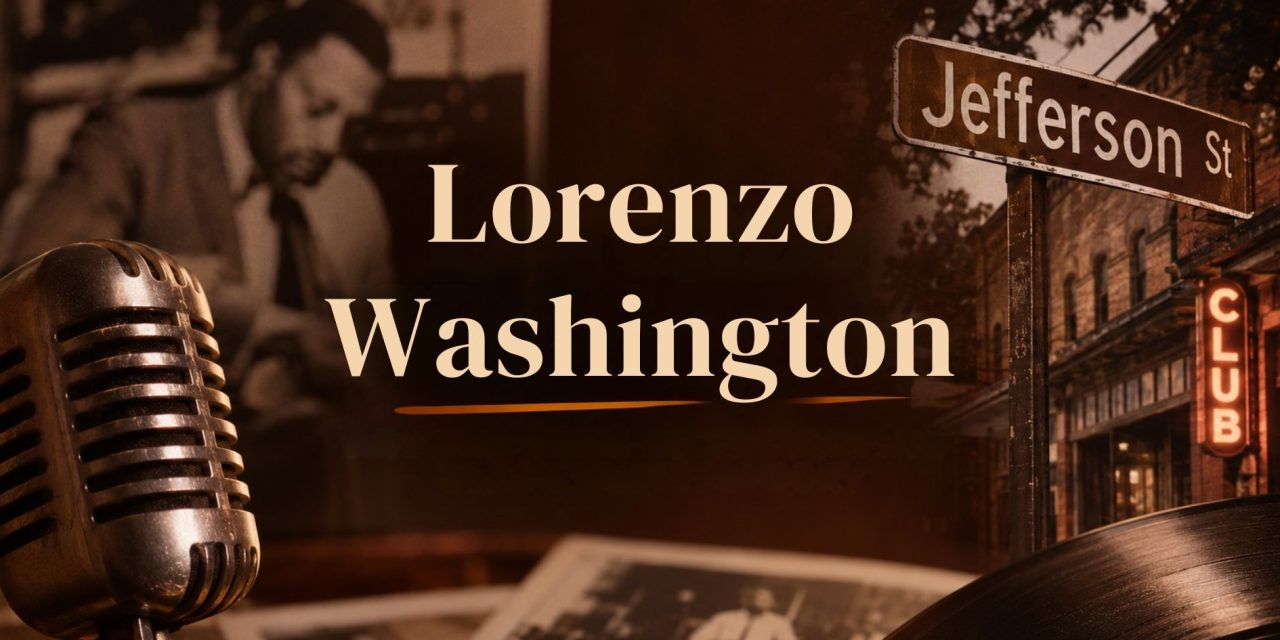
Lorenzo Washington, founder and curator of Nashville’s Jefferson Street Sound Museum, has died at 83. The National Museum of African American Music announced his passing on October 22, 2026, saying he died that week. His family later confirmed his death following a short bout with cancer. Public reports have not specified his exact date of death.
Washington spent years preserving the history of Jefferson Street, a historically Black Nashville corridor whose clubs, musicians, and audiences helped shape rhythm and blues, soul, and American popular music. Through the museum, which he established in 2011, he documented the venues, performers, and community connections behind that legacy. His work showed that preserving music history means remembering not only famous artists but also the people and places that helped shape their sound.
Jefferson Street Before the Erasure
Long before Nashville’s music identity became synonymous with Music Row, Jefferson Street was a vital center of Black nightlife and performance. Clubs such as the Del Morocco, New Era, and Club Stealaway hosted touring artists and gave local performers places to develop their craft.
Ray Charles and B.B. King were among the nationally known musicians who performed along the corridor. Nashville artists such as Marion James and Jimmy Church also built careers within that musical ecosystem.
Jefferson Street’s history intersects with Jimi Hendrix, who spent time in Nashville and played in Little Richard’s backing band. That story attracts attention because the names are famous. Washington’s work made a broader point: the scene mattered because of the network around those names. Bandleaders, club owners, musicians, radio listeners, dancers, and neighbors all helped make the music possible.
Urban renewal and highway construction disrupted Black business districts across the United States, and Nashville was no exception. In the late 1960s, Interstate 40 cut through North Nashville, disrupting Jefferson Street’s businesses and community life. Venues closed, buildings disappeared, and a living cultural map became harder to see. Washington spent much of his later life ensuring that the neighborhood’s musical history would not disappear with them.
A Museum Built From Memory and Persistence
Washington founded the Jefferson Street Sound Museum in 2011, opening his own home to preserve and share the corridor’s history. One of his early projects was a music genealogy tree mapping former venues and the artists who performed there. The visual record connected musicians with the places where their careers and collaborations developed.
The museum grew into a collection of thousands of photographs, instruments, recordings, and stories. Washington used these materials to connect personal memories with historical evidence, welcoming students, music lovers, and visitors interested in Nashville’s Black musical heritage.
His preservation work extended beyond collecting memorabilia. He helped document Jefferson Street through historical mapping, public education, and efforts to recognize the corridor’s overlooked landmarks. In 2024, the National Museum of African American Music honored him with its Living Legends: Lorenzo Washington exhibition, recognizing the cultural importance of his work. In 2026, the Jefferson Street Sound Museum was added to the U.S. Civil Rights Trail.
For DLK Soul readers, Washington’s example offers an important correction to how music history is often told. Soul does not emerge only from landmark recordings. It also grows in rooms where musicians meet, experiment, and learn how to hold an audience.
It travels through local radio, neighborhood businesses, and informal mentorship. When those systems are ignored, the music can be celebrated while the communities that produced it are pushed out of the frame.
Preservation Is Part of the Music
Washington’s work also speaks to today’s artists, producers, and listeners. Digital access can create the impression that everything is already archived. It is not. A streaming catalog cannot explain who booked the room, who introduced the players, why a particular club mattered, or how segregation shaped where Black musicians could work and gather.
Those details often live with people before they reach institutions. Preserving them requires interviews, photographs, flyers, venue maps, family archives, and careful fact-checking. It also means recording names, dates, and locations while people can still identify the people and places in old photographs.
The Jefferson Street Sound Museum turned that responsibility into public education. Washington helped residents and visitors see Nashville’s Black music history as central to the city, not peripheral to a better-known commercial narrative. His work preserved context: the social and cultural networks surrounding the sound.
How Readers Can Carry the Work Forward
A tribute to a cultural historian should lead to action. Readers can begin close to home by asking older relatives and community members about the clubs, churches, record stores, radio shows, and rehearsal spaces they remember. With their permission, record those conversations. Label photographs with names, dates, and locations before those details are lost.
Support local archives and small museums, especially institutions preserving Black cultural history. Donate relevant photographs, recordings, flyers, or documents when appropriate, and ask institutions how they accept and preserve community materials. When sharing a famous artist’s story, look for the local musicians, venues, and organizers who helped create the conditions for that success.
Readers can also support the Jefferson Street Sound Museum and learn directly from the history Washington worked to preserve. The museum remains open following his death, although visitors should check its official website for current hours and access details.
Lorenzo Washington preserved more than memories of a vanished nightlife district. He protected evidence that Black Nashville helped build the sound of American music. His work reminds us that every beloved song has a history worth exploring, and every music scene has stories that deserve to be remembered. Continue discovering the artists, communities, and histories behind the music you love with DLK Soul.
Sources
National Museum of African American Music, “Living Legends: Lorenzo Washington”
Axios Nashville, “Lorenzo Washington, Who Preserved Jefferson Street’s Musical Heritage, Dies at 83,” October 23, 2026
WZTV Fox 17, “Lorenzo Washington, Founder of Jefferson Street Sound Museum, Dies at 83,” October 22, 2026
Jefferson Street Sound Museum, “Lorenzo Washington”