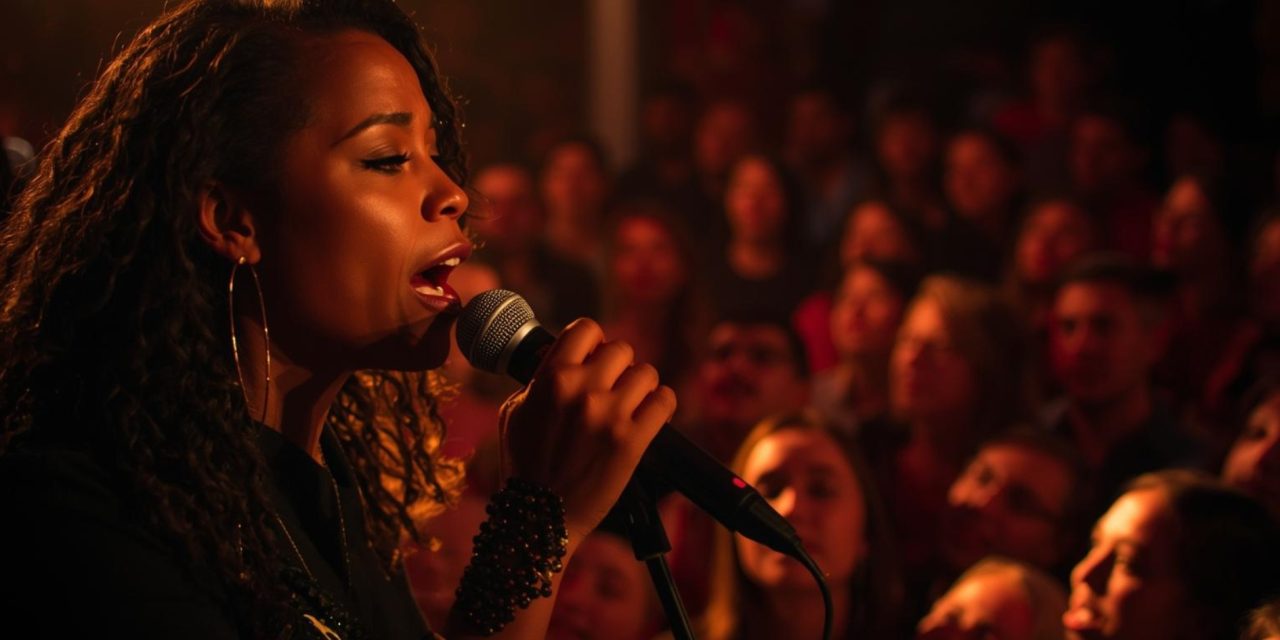
If melody carries emotion, then storytelling gives it direction. Soul music thrives on this balance — not just in what’s sung, but how it’s told. Every lyric, tense, and instrumental cue becomes a thread in the tapestry of human experience.
And let’s be honest: no other genre can make you question your life choices halfway through a bridge like Soul can. Whether it’s whispered in a late-night demo or shouted across a packed venue, soul lives and dies by its narrative. The way it utilizes point of view, time, and tension determines whether a song lingers or fades away.
POV, Time, and Tension
In soul, three narrative levers guide the emotional journey: point of view, time, and tension.
The point of view determines the intimacy. First person (“I”) pulls listeners into the singer’s skin, while second person (“you”) invites — or confronts — them directly. Third person (“she,” “they”) creates reflection, like looking through glass. Smart songwriters even shift POV mid-song — a bridge switching from “I” to “you” can signal revelation or growth.
Then there’s time. Present tense drops us into the moment — the coffee’s still hot, the tears are still fresh. Past tense gives the ache of memory, while future tense becomes a promise or a warning. Shifting between them keeps the listener engaged, like emotional cinematography.
And of course, tension. Every soul song asks something: Can I forgive? Will we make it? Do I let go? The answer might arrive loud and clear — or not at all. The production should echo that arc. A string swell can sound like acceptance; a sudden drum cut can feel like hesitation. In the best songs, resolution comes not when the beat ends, but when the listener exhales.
Imagery, Conversation, and the Story Beyond the Studio
Soul has always been visual — you can see the steam curling from a midnight kettle or hear the heartbeat between verses. That’s what grounds emotion in reality. Without imagery, the biggest heartbreak can sound like filler.
Yet, imagery alone doesn’t make it human. Conversational phrasing does. When a lyric sounds like something you’d actually whisper, mumble, or confess, the performance breathes. Suddenly, it’s not a singer performing; it’s a person talking — and people listen differently when they feel spoken to.
That intimacy doesn’t stop at the studio door. Streaming has turned albums into story arcs. Singles behave like chapters, EPs like novellas, and deluxe editions like expanded cuts. Visual storytelling now completes the experience: lyric videos reflect tone, live sessions feel like raw diary entries, and short films bind tracks into emotional continuity. Even social snippets — a phone clip of a hook, a voice memo of a half-formed chorus — make listeners part of the story’s creation, not just its premiere.
And when the story reaches the stage, it transforms again. The band becomes the narrator. The drummer pulls the chorus ahead to show urgency; the bassist holds back to give space to regret; background vocals echo like friends who understand. In small venues, a hushed bridge becomes confession; in grand halls, a key change feels like redemption. Great sets don’t just replay songs — they retell the artist’s emotional autobiography in real time.
Conclusion
In the end, the magic of soul storytelling isn’t just about craft — it’s about empathy. It’s the art of making private emotions communal. By mastering point of view, time, and tension, soul artists turn sound into narrative and rhythm into revelation.
Every verse becomes a confession, every beat a heartbeat — and every listener, for a few minutes, lives inside someone else’s truth.
Which story are you telling through your sound today? Explore how artists turn emotion into narrative at DLK Soul, where rhythm and storytelling meet.