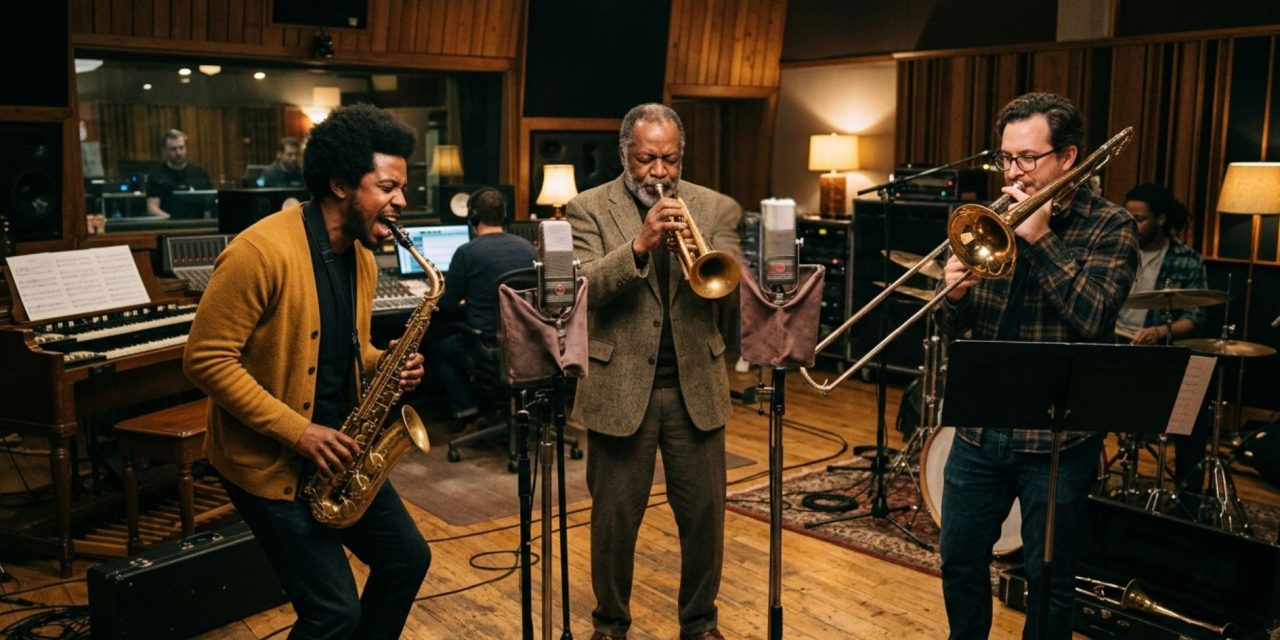
Soul music without horns would feel a little… underdressed. Like showing up to a celebration and realizing the band forgot the part that makes everyone feel something instantly.
And the funny thing is, you might not even notice it at first. The groove is there, the vocals are strong—but something feels just slightly incomplete. That missing layer? It’s often the warmth, punch, and conversation that brass and woodwind instruments quietly bring into the mix.
That’s the quiet magic of horns. They don’t just sit in the background—they shape the emotion, reinforce the rhythm, and give soul music its unmistakable character.
The Impact of Horn Sections
Horn sections are one of the defining forces behind soul music’s emotional and rhythmic power.
Groups like Booker T. & the M.G.’s, closely associated with Stax Records, helped shape that unmistakable sound. Their classic “Green Onions” may lean heavily on organ, but the tight, minimal horn accents found across Stax productions became a blueprint for groove-driven soul.
Then you have artists like Otis Redding, whose track “(Sittin’ On) The Dock of the Bay” uses horns with restraint—adding warmth and subtle emotional depth rather than overpowering the vocal. It’s a masterclass in knowing when less is more.
On the other end of the spectrum, Isaac Hayes embraced fuller, more cinematic arrangements, where brass sections added drama and intensity to already rich compositions.
What makes horn sections so powerful in soul?
- They punctuate rhythm with sharp, punchy accents
- They create hooks that stick long after the song ends
- They mirror or respond to vocals, adding conversational energy
This interplay between voice and instruments is where the soul truly lives—a back-and-forth that feels human, expressive, and alive.
Notable Brass Arrangements and Their Emotional Power
Some of the most iconic soul tracks owe their identity to unforgettable brass arrangements.
Take “Soul Man” by Sam & Dave. The horns don’t just sit in the background—they drive the urgency of the song, hitting sharp, rhythmic stabs that amplify its message and energy.
Or revisit “Green Onions” again—this time noticing how the brass elements (even when subtle) support the groove, locking in with the rhythm section to create something hypnotic and timeless.
What stands out in these arrangements is technique:
- Call-and-response phrasing between horns and vocals
- Tight, rhythmic stabs that reinforce groove
- Layered harmonies that add emotional weight without clutter
These aren’t just musical choices—they’re storytelling tools. The horns often say what words can’t, adding tension, release, or even celebration within a track.
Bringing That Soul Into Modern Production
Even today, producers continue to draw inspiration from these classic techniques.
With tools like Ableton Live, recreating or reimagining brass sections is more accessible than ever. You can layer virtual instruments, experiment with phrasing, and even simulate that vintage feel with the right processing.
But here’s the key: it’s not just about adding horns—it’s about how you use them.
- Let them breathe between phrases
- Use them to support, not overshadow, the vocal
- Think of them as emotional cues, not just musical layers
Whether you’re working with real players or virtual instruments, the goal remains the same: make the listener feel something real.
Conclusion
At its core, soul music has always been about connection—between artist and listener, voice and instrument, rhythm and emotion.
Brass and woodwinds play a quiet but powerful role in that connection. They bring warmth where it’s needed, energy where it’s lacking, and depth where words fall short.
And maybe that’s why their presence feels so timeless. Long after trends shift and sounds evolve, those horn lines still hit the same way—familiar, comforting, and deeply human.
Because sometimes, it’s not the loudest element in a song that stays with you…
it’s the one that understands the feeling best.
Which soul track’s horn section hits you so hard you feel it in your chest before you even think about it?
Drop it in the comments, tell us why it stands out—and if you’re serious about understanding what makes soul soul, keep locking in with the deeper breakdowns only on DLK Soul!