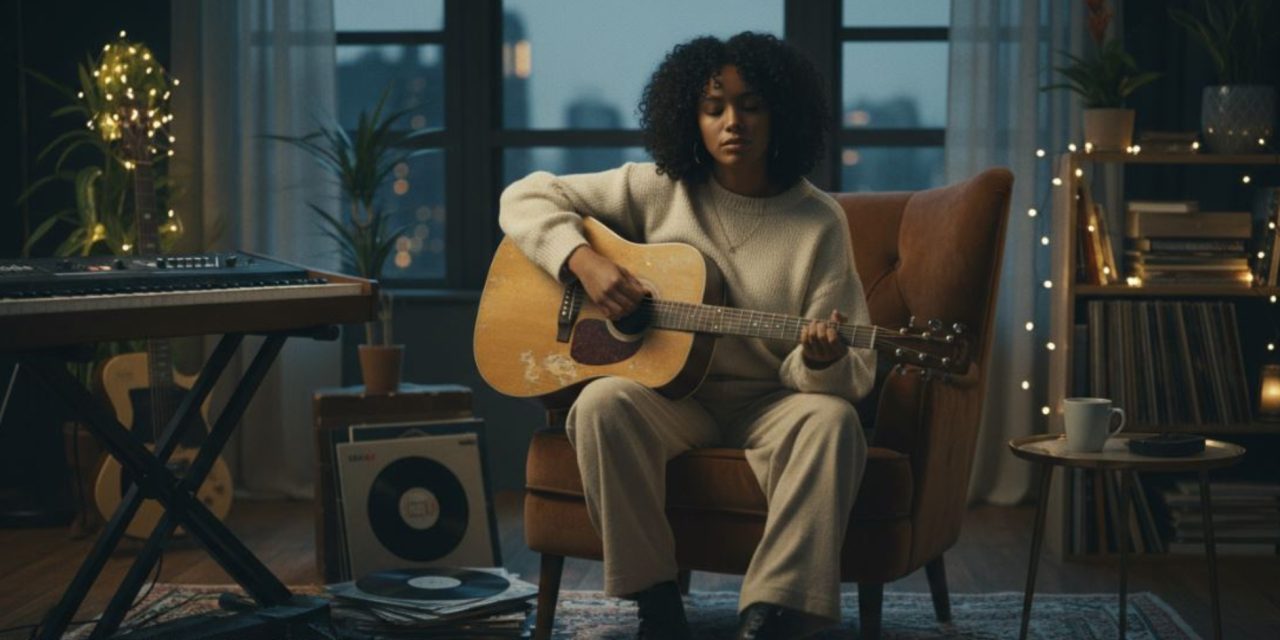
Neo-soul has always lived in the in-between. It never chased pop’s immediacy or hip-hop’s confrontation outright. Instead, it carved out space for groove, reflection, and emotional nuance. In its early revival era, the genre intertwined romance with subtle social critique—love songs that carried both sensuality and commentary.
Today, that balance hasn’t disappeared. It has simply turned inward.
Where earlier waves blended desire and protest, the current generation leans into emotional depth. The shift isn’t louder. It’s steadier. And that steadiness is redefining both the sound and the structure of modern neo-soul.
Lyrical Shifts: From Grand Declarations to Grounded Growth
Foundational artists like Erykah Badu and D’Angelo built a language of layered intimacy. Their music felt spiritual, sensual, and socially aware all at once. Love wasn’t simple—it was textured.
The newer wave keeps that texture but recalibrates the posture.
Instead of dramatic proclamations, we hear conversations. Apologies sound reflective rather than defensive. Desire is framed through mutuality and consent. Longing carries self-respect instead of self-erasure. The tone has shifted from intensity to intentionality.
Artists such as Snoh Aalegra and Lucky Daye often explore vulnerability with boundaries intact. Their songs don’t just describe feelings—they examine them.
Importantly, this evolution doesn’t feel clinical. It isn’t therapy language set to chords. It’s emotional intelligence embedded in harmony. The sixths and sevenths still glide. The grooves still breathe. But the storytelling feels emotionally literate rather than emotionally reactive.
As the writing grows more self-aware, something else begins to shift alongside it.
The Business Mirrors the Lyrics
The same artists writing about boundaries are also setting them in their careers.
Streaming has lowered the barrier to near-constant output, allowing artists to release when the art feels ready rather than when a label calendar demands it. That flexibility favors independent musicians who prioritize ownership and pacing.
Platforms like Bandcamp enable direct sales without middle layers, while tools such as Patreon give fans a structured way to support creative work beyond streams. Even direct messaging and limited vinyl drops have become micro-economies of loyalty.
Labels still offer scale—radio access, global campaigns, and touring infrastructure—but the center of gravity has shifted. Increasingly, artists are building careers around ownership of masters, control of visuals, and self-defined timelines.
Creative autonomy now reflects emotional autonomy.
The inward lyrical shift and the outward business strategy are not separate movements. They are parallel expressions of the same mindset: clarity over chaos, intention over impulse.
The Bottom Line
Neo-soul isn’t trying to shock culture again. It doesn’t need to. Its evolution is quieter and, in many ways, more sustainable.
The genre is deepening rather than pivoting. Emotional growth shapes the songwriting. Strategic independence shapes the rollout. Care extends from relationships into contracts.
What once felt like revival now feels like refinement. And that refinement may define its next era.
Is your artistry evolving with the culture — or staying where it feels safe? If you’re navigating emotional storytelling, ownership, and long-term creative growth, stay connected with DLK Soul for deeper insight into where neo-soul music is headed next.


